
Mexican mock orange
Philadelphus mexicanus Schltdl.
Description
Growing requirements
The Mexican mock orange (Philadelphus mexicanus) is a distinct member of the Hydrangeaceae family, characterized by its evergreen or semi-evergreen habit. Originating from the mountainous regions of Mexico, this shrub is well-adapted to environments that provide stable moisture and mild thermal conditions throughout the year.
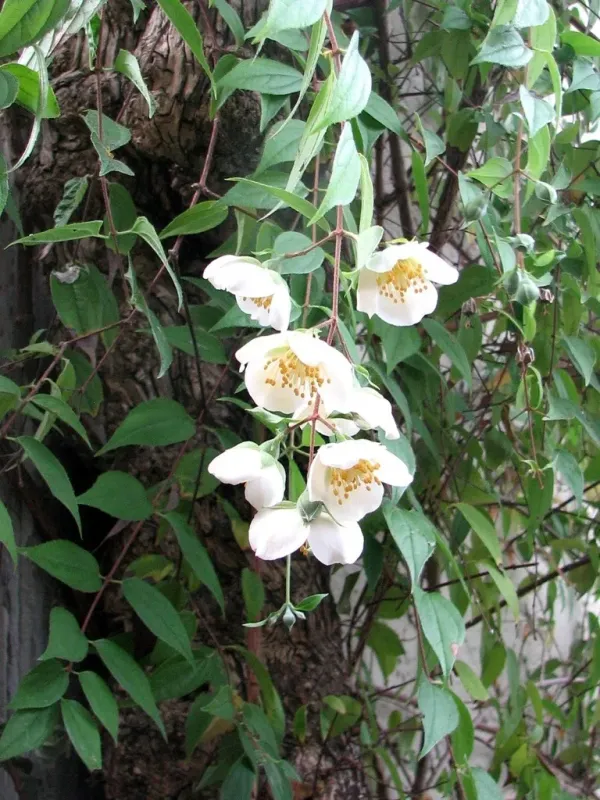
Botanically, it differs from the more common deciduous species of mock orange due to its more delicate, slender stems and glossy, darker foliage. It is highly valued for its fragrant, white to creamy flowers that exude a scent reminiscent of orange blossoms, justifying its common name.
To ensure healthy growth, the plant requires well-draining, nutrient-rich soil with a slightly acidic to neutral pH. It thrives in locations that offer dappled sunlight, as full exposure to intense midday sun can scorch the leaves, especially in hotter climates where it is typically cultivated.
Cultural practices include consistent watering during the growing season, ensuring the soil remains moist but never waterlogged. Regular pruning is also recommended to maintain a desired shape and encourage new growth, which in turn leads to more profuse flowering in the following season.
In terms of хозяйственного usage, the Mexican mock orange is primarily utilized as an ornamental plant. It is frequently employed in formal garden designs, courtyards, or greenhouse collections where its fragrant flowers can be enjoyed in a controlled, protected environment.
Main diseases and pests
The primary pests affecting Philadelphus mexicanus are aphids and spider mites, which can proliferate rapidly in dry or stagnant air conditions. Monitoring the foliage and maintaining proper humidity are essential steps to keep these populations under control and prevent infestation.
Diseases such as powdery mildew or various leaf spots can occur when air circulation is poor. To mitigate these risks, it is important to provide sufficient spacing between plants and avoid overhead watering, which keeps the leaf surface dry and reduces fungal spores germination.