
Virginal Mock Orange
Philadelphus x virginalis Rehder
Description
Growing requirements
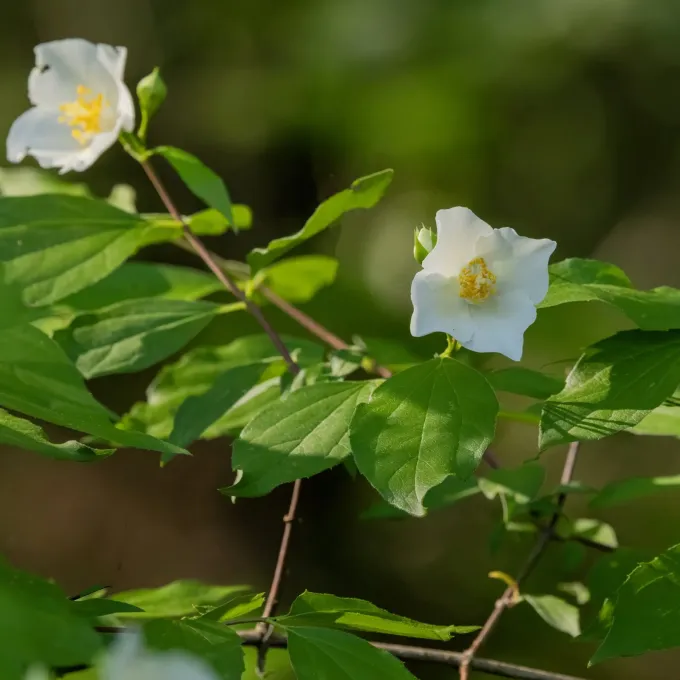
Virginal Mock Orange (Philadelphus x virginalis) is a distinguished deciduous shrub belonging to the Hydrangeaceae family. Known for its intense fragrance and large, double white blossoms, it is a staple of temperate climate landscape gardening.
This shrub thrives in locations with full sun to partial shade. Exposure to direct sunlight for most of the day is essential for abundant flowering; insufficient light levels result in leggy growth and fewer blooms, diminishing the shrub's aesthetic appeal.
The plant demands well-drained, fertile soil with moderate moisture retention. While it can adapt to various soil types, it performs best in neutral to slightly alkaline conditions. It is critical to avoid waterlogged sites, as root rot is a common issue in poorly aerated soils.
Standard agronomic practices include spring fertilization and annual pruning immediately after the blooming period. Removing older stems encourages the growth of new wood, ensuring that the shrub remains vigorous and continues to produce high-quality flowers year after year.
The primary use of this species is ornamental. It is frequently employed as an architectural element in garden design, serving perfectly as an informal hedge or as a focal point in mixed shrub borders, adding both visual beauty and fragrance to the landscape.
Main diseases and pests
Aphids represent a frequent threat to Virginal Mock Orange, particularly during the active spring growth phase. They cluster on soft new foliage and stems, causing curling and reducing the plant's overall vigor through persistent sap feeding.
Spider mites are another significant pest, typically manifesting in hot and dry weather conditions. These pests thrive in dry environments and can cause visible leaf stippling, which may progress to leaf drop if the infestation remains untreated for too long.
Fungal diseases like gray mold can occur when humidity levels remain consistently high, especially if the air circulation within the shrub canopy is restricted. Keeping the plant properly pruned to allow for airflow is a key preventive measure.
Powdery mildew is also a concern, identified by a powdery white coating on the leaves. Treatment involves both chemical fungicides and cultural practices, such as ensuring that the plant is not overcrowded and receives adequate light penetration.
- Pruning for better air circulation and light.
- Monitoring for pest presence during the growing season.
- Applying systemic treatments to control early aphid outbreaks.