
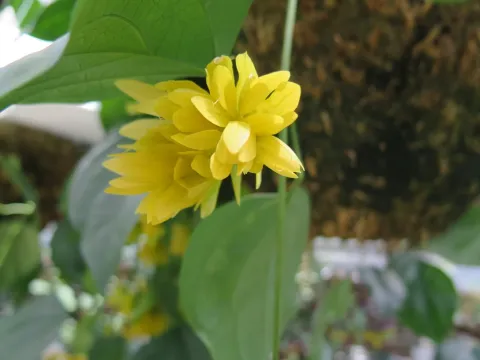
Petraeovitex
Petraeovitex
The genus Petraeovitex belongs to the family Lamiaceae, consisting mainly of woody vines and scandent shrubs. These plants are native to the tropical rainforests of Southeast Asia, thriving in regions like the Philippines and Malaysia.
What the section contains


Petraeovitex
These plants require a stable tropical environment with high humidity and consistent temperatures, ideally ranging between 22 and 28 degrees Celsius. They are extremely frost-sensitive and should not be exposed to temperatures below 10 degrees.
A well-draining, nutrient-rich soil is essential for their growth. Growers typically use a potting mix comprising peat, pine bark, and perlite to ensure the roots have access to sufficient oxygen while retaining necessary moisture.
Lighting should be bright but indirect. Intense, direct sunlight can damage the leaves, causing chlorosis or necrotic spots. In indoor environments, they benefit from light filtration provided by shade cloths or window curtains.
Watering must be frequent but careful. The substrate should be kept consistently moist but never waterlogged, as poor drainage is the primary cause of root rot in these species, which can kill the plant quickly.
As a non-agricultural ornamental plant, Petraeovitex is not harvested for food or fiber. Its main value lies in its aesthetic contribution to indoor gardens, conservatories, and specialized tropical landscape designs.
Propagation is primarily achieved through stem cuttings. Successful propagation requires high humidity levels and bottom heat to encourage root development within 4 to 6 weeks after planting in a loose medium.
Maintenance pruning is a key aspect of cultivation. Since the plant has a vining habit, it often requires sturdy trellises or supports to grow effectively and showcase its unique cream or yellowish inflorescences.
Fertilization should be applied sparingly during the growing season using balanced liquid fertilizers. Excessive nitrogen can lead to exuberant leafy growth at the expense of flower production.
Monitoring for health involves checking the undersides of leaves for common greenhouse pests. Maintaining good airflow is the most effective preventative measure against fungal infections and insect colonization.