
Petraeovitex wolfei
Petraeovitex wolfei
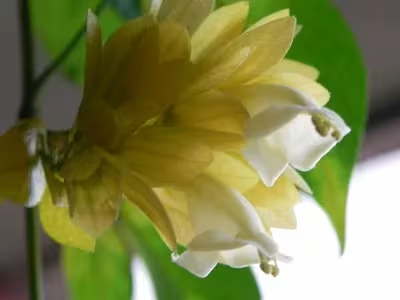
Description
Growing requirements
Petraeovitex wolfei is a member of the Lamiaceae family, primarily native to the humid tropical environments of Southeast Asia. This species is characterized by its specific adaptation to forest-dwelling conditions.
The plant requires a strictly regulated climate with temperatures maintained between 22°C and 28°C. Exposure to extreme cold or excessive thermal fluctuations can severely impair its metabolic processes and overall plant health.
Optimal soil conditions must include excellent drainage and high organic content. A substrate pH ranging from 5.5 to 6.5 is essential for nutrient uptake and the long-term vitality of the root system.
Agrotechnical management involves consistent irrigation practices that prevent soil saturation while maintaining adequate atmospheric humidity around the foliage.
Due to its niche environmental needs, large-scale commercial cultivation is limited. Growers often focus on small-batch production for specialized horticultural or research purposes.
Main diseases and pests
The primary threats to Petraeovitex wolfei include soil-borne pathogens such as Phytophthora, which thrive in environments where drainage is insufficient or irrigation is excessive.
Spider mites represent the most common arthropod pest. Their feeding habits cause chlorosis and significant reduction in leaf surface area, impacting the plant's photosynthetic capacity.
Mealybugs can also pose a risk, particularly when the plants are housed in greenhouses where the lack of natural predators allows their populations to expand rapidly.
Control strategies should focus on integrated pest management (IPM), emphasizing biological control agents and mechanical removal where feasible to avoid chemical stress.
Maintaining a high standard of hygiene in the growing area, including the sterilization of tools and pots, is critical for preventing the spread of fungal and bacterial infections.