
Penstemon venustus
Penstemon venustus
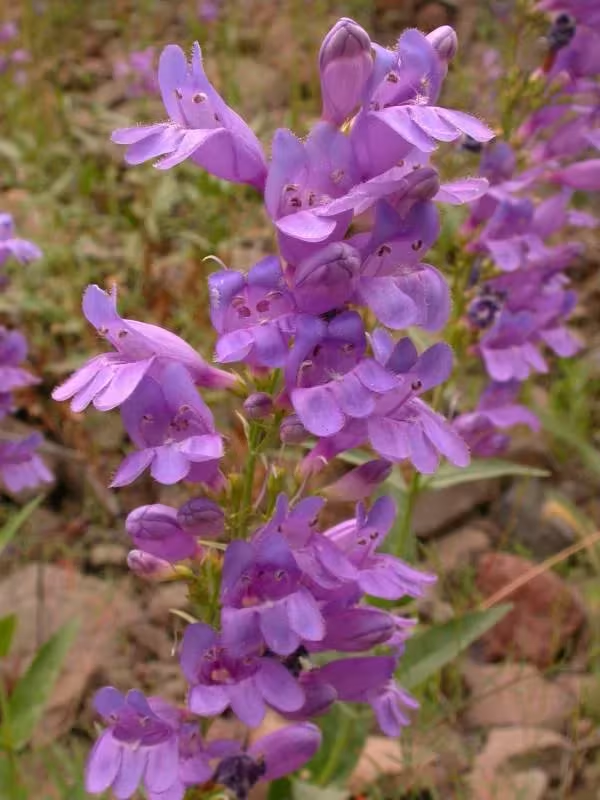
Description
Sowing dates
Sowing seeds of Penstemon venustus is best achieved through fall sowing or cold stratification for several weeks before spring planting. This process mimics natural environmental cues, which are essential for breaking seed dormancy and ensuring uniform germination.
Use a well-draining, sterile seed-starting mix. Cover seeds lightly with sand or vermiculite, as they require a bit of light to germinate. Maintain a consistent temperature of around 18-20°C and ensure adequate airflow to prevent damping-off diseases during the early stages of seedling development.
Prick out the seedlings once the first set of true leaves appears. Handle them with care to avoid root damage, and transplant them into individual cells to encourage robust root growth before hardening them off for outdoor planting.
Transplant the seedlings into the garden after the last frost. Space the plants at least 45 cm apart to ensure proper ventilation and prevent fungal growth. Choose a location that receives full sun to encourage sturdy stems and prolific flowering throughout the summer season.
Propagation by cuttings can also be performed in late spring or early summer using non-flowering shoots. Insert the cuttings into a grit-rich medium and keep them in a lightly shaded, humid environment until roots are well-established.
Growing requirements
Penstemon venustus, belonging to the Plantaginaceae family, is native to rocky, mountain environments. It thrives in poor, rocky, or sandy soils that possess excellent drainage. It is highly intolerant of waterlogged soil, which leads to immediate root rot.
Full sun is non-negotiable for this species. When planted in areas with insufficient sunlight, the plants become leggy, produce fewer blooms, and exhibit reduced vigor. Ensure there is no overhanging foliage from trees or shrubs that could create deep shade.
Watering requirements are low once the plants are established. During the first growing season, keep the soil moderately moist, but thereafter, allow the soil to dry out between waterings. Avoid overhead irrigation, as wet foliage is susceptible to fungal infections.
The ideal soil pH for this culture is neutral to slightly alkaline. Fertilizer applications should be kept to a minimum; excessive nutrients often stimulate excessive leafy growth, which is detrimental to the structural integrity and blooming potential of the plant.
Winter hardiness is excellent, provided the soil remains dry. In climates with heavy winter precipitation, consider planting on slopes or elevated berms to ensure that snowmelt and rainwater drain rapidly away from the plant's crown.
Main diseases and pests
Root rot is the most common threat to Penstemon venustus, usually caused by improper soil drainage or over-watering. Prevention is key: incorporate grit or small stones into the planting hole and ensure the site is not prone to flooding.
Powdery mildew may manifest as a white, dusty layer on the leaves during periods of high humidity and poor air circulation. Increase plant spacing and ensure proper thinning of surrounding vegetation to encourage better airflow and keep foliage dry.
Aphids can occasionally cluster on the flower stalks, causing damage to buds. If infestations occur, a gentle wash with insecticidal soap or the introduction of beneficial predatory insects like ladybugs is usually sufficient to manage the population.
Nematodes are another concern in specific soil types. Crop rotation and ensuring healthy plant vigor are the best long-term strategies. Avoid planting penstemons in the same spot where diseased plants have previously shown signs of infestation.
Slugs and snails can be a problem during the spring when new growth is tender. Utilize barriers like crushed shells or copper tape, or hand-pick pests in the early morning hours to protect the delicate young shoots from severe defoliation.