
Penstemon cobaea
Penstemon cobaea
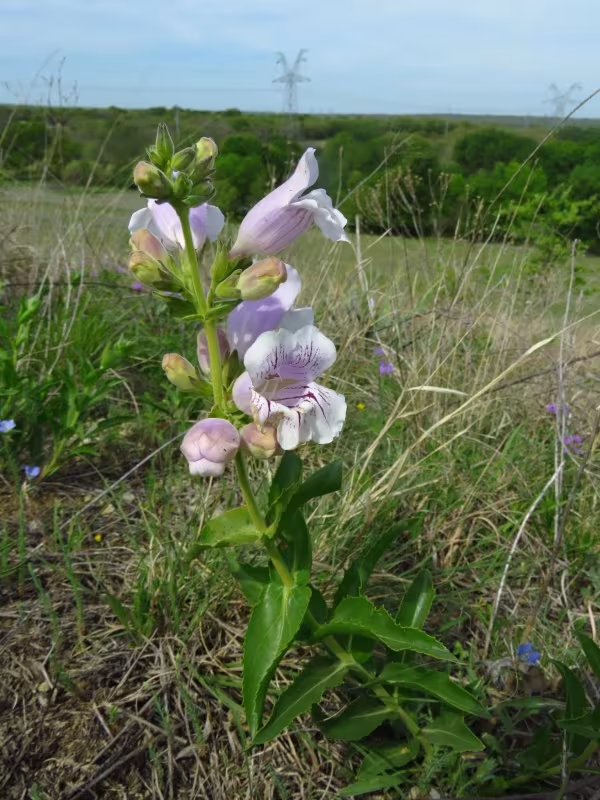
Description
Sowing dates
Penstemon cobaea seeds require a period of cold stratification to break dormancy, which is crucial for achieving a uniform and high germination rate.
For best results, seeds should be sown in late autumn or early winter, allowing them to undergo natural or artificial chilling before the growing season.
When sowing in trays, use a well-draining seed-starting mix and cover the seeds very lightly, as they require some exposure to light to germinate properly.
Maintain consistent moisture during the germination process, ensuring the substrate does not become waterlogged, which can lead to fungal issues.
Once seedlings have developed their first true leaves, they should be transplanted into individual pots to strengthen the root system before final placement.
Growing requirements
Penstemon cobaea belongs to the Plantaginaceae family and is native to the rocky prairies and limestone glades of the central United States.
The plant thrives in full sun exposure, which is essential for developing its robust stems and large, tubular, often fragrant bell-shaped flowers.
Soil quality is paramount: it requires excellent drainage and performs best in sandy or gravelly loam with a neutral to slightly alkaline pH.
Over-fertilization, especially with nitrogen, should be avoided as it encourages soft, succulent growth that is more susceptible to pests and weather damage.
The species is adapted to semi-arid conditions, meaning it requires minimal supplemental irrigation once established, provided the soil remains free-draining.
Main diseases and pests
The most significant threat to Penstemon cobaea cultivation is root rot, which occurs rapidly in poorly drained soils or during periods of excessive rainfall.
Powdery mildew is a common fungal infection, especially when plants are grown in conditions with poor airflow or high humidity levels during late summer.
In terms of insect pests, aphids and spider mites can become an issue, particularly when plants are stressed by drought or nutritional imbalances.
Integrated pest management, including sanitation and appropriate site selection, is the primary method for maintaining healthy, vigorous plant stands.
- Monitor for early signs of leaf yellowing
- Ensure adequate spacing between plants
- Remove debris around the base of the plant
- Use preventative fungicides if conditions are consistently wet
- Avoid heavy mulching directly against the crown