
Gray beardtongue
Penstemon canescens
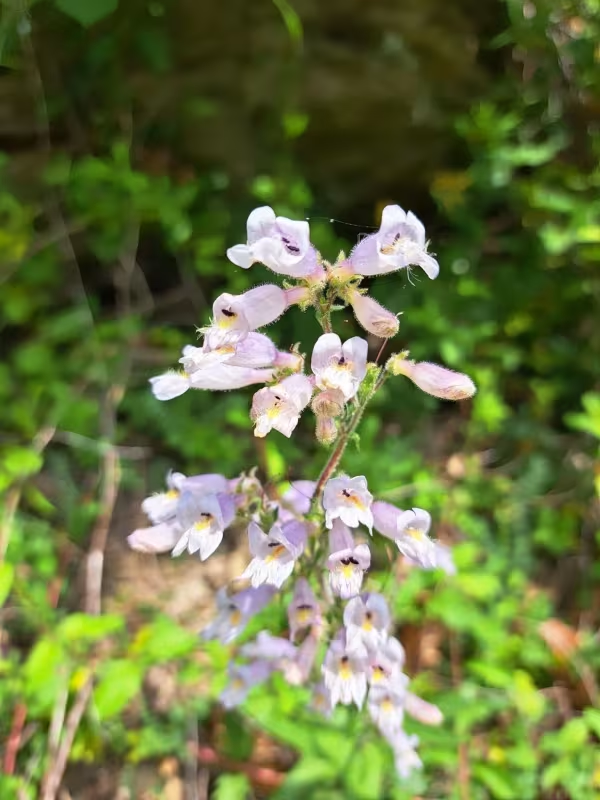
Description
Sowing dates
Penstemon canescens, commonly known as the gray beardtongue, is a perennial flowering plant in the Plantaginaceae family. Native to the southeastern United States, it thrives in rocky, well-drained slopes and open woodlands, making it a valuable species for native landscaping and xeriscaping.
Propagation is primarily achieved through seeds, which benefit from a period of cold-moist stratification. Placing the seeds in a damp medium at temperatures near freezing for 4 to 8 weeks significantly improves germination rates once they are moved to warm conditions in early spring.
When sowing indoors, the seeds should be surface-sown as they require light to germinate. The containers should be kept in a bright, temperate area, ensuring the growing medium stays consistently moist but not waterlogged until the seedlings emerge and establish a true leaf pair.
Transplanting into the garden should occur only after the danger of late frost has passed. Selecting a site with full sun to partial shade is essential to maintain the plant's structural integrity, as insufficient light often leads to leggy growth and reduced flowering potential.
When establishing a cluster of these plants, a spacing of approximately 15 to 18 inches between individuals is recommended. This spacing facilitates proper air circulation around the foliage, which is a critical factor in preventing the moisture-related diseases that often plague this species.
Growing requirements
The primary requirement for Penstemon canescens is exceptionally well-draining soil. In heavy clay soils, the plant will likely succumb to root rot during winter or wet spring months, so incorporating coarse sand, grit, or fine gravel into the planting hole is highly advisable for success.
While the plant is adapted to nutrient-poor soils, a light application of a balanced, slow-release fertilizer in early spring can promote more vigorous growth. Avoid excessive nitrogen, as it promotes lush foliage at the expense of floral production and can weaken the stems.
Watering should be deep and infrequent once the plant is established. During the peak of summer heat, provide supplemental water, but always apply it at the base of the plant to keep the leaves and crown dry, thereby reducing the risk of fungal leaf spot and powdery mildew.
Winter survival depends largely on drainage. The crown of the plant must remain dry during the dormant season; therefore, using a layer of fine gravel or decorative stone as mulch around the base acts as both a moisture barrier and a protection against freeze-thaw damage.
The species is generally hardy, but in zones at the edge of its range, a light cover of evergreen boughs can provide enough protection to prevent winter desiccation. Always ensure that any winter protection is removed promptly in early spring to allow for rapid growth.
Main diseases and pests
Fungal issues, specifically powdery mildew and various leaf spots, are the most frequent threats to the gray beardtongue. These occur predominantly when the plant is exposed to high humidity or insufficient airflow, emphasizing the need for proper site selection and spacing.
Insects such as aphids may congregate on the new growth during the spring. While rarely fatal to mature plants, a heavy infestation can cause stunted growth or deform floral spikes. Neem oil or mild insecticidal soaps are effective tools for managing these populations early in the season.
Slugs and snails can be problematic for young seedlings or plants located in damp, shaded spots. Utilizing physical barriers like crushed shells or copper tape can deter these mollusks without the need for toxic chemicals, protecting the plant during its vulnerable development stage.
Root rot is the most common cause of plant loss for this species. If the foliage begins to wilt or turns yellow despite adequate soil moisture, it is often a sign that the root system is struggling due to poor drainage or excess water, requiring immediate attention to soil structure.
Regular maintenance, including the removal of spent flower stalks, serves as a prophylactic measure. Pruning not only keeps the garden looking neat but also eliminates potential sites where moisture can linger and harbor fungal pathogens during cool or rainy weather patterns.