
Penstemon cardwellii
Penstemon cardwellii
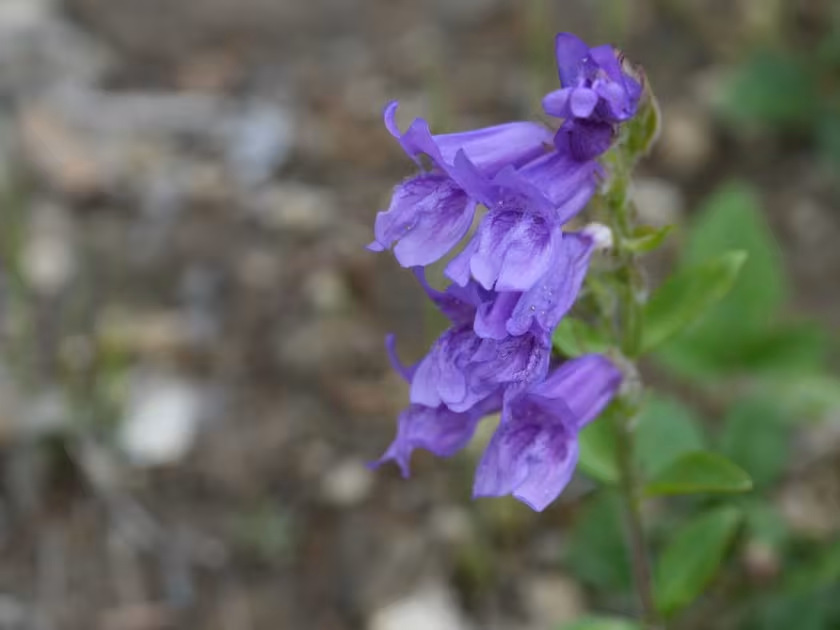
Description
Sowing dates
Seeds of Penstemon cardwellii require cold stratification to break dormancy; sowing in autumn allows for natural exposure to winter temperatures.
For spring sowing, store the seeds in a moist medium within a refrigerator for approximately 6 to 8 weeks before planting them into starter trays.
The seeds should be sown on the surface of well-draining soil and lightly covered, as light is often a trigger for successful germination in this genus.
Maintain consistent moisture levels during the germination phase, ensuring the environment is well-ventilated to prevent damping-off diseases.
Seedlings should be hardened off gradually before being transplanted into their permanent garden location after the final frost risk has passed.
Growing requirements
Penstemon cardwellii is a woody, evergreen subshrub belonging to the Plantaginaceae family, native to the mountainous regions of the Pacific Northwest.
This species thrives in full sun exposure and requires a location that provides excellent air circulation to maintain its healthy evergreen foliage.
The soil must be exceptionally gritty and well-draining; planting in heavy clay or waterlogged areas will almost certainly lead to root rot and failure.
It performs best in low-fertility soils, as excessive nitrogen application tends to produce weak, leggy growth that is prone to disease and winter damage.
Once established, the plant is quite drought-tolerant, requiring irrigation only during prolonged dry spells to keep the root system from desiccating entirely.
Main diseases and pests
Root rot is the primary threat to the longevity of Penstemon cardwellii, usually induced by poor drainage, excessive irrigation, or high humidity in winter.
Fungal leaf spots can occur when foliage remains wet for extended periods, making proper site selection and spacing critical for disease prevention.
Pests such as aphids and spider mites can occasionally affect the plant during the growing season, particularly if the plant is under heat or drought stress.
Powdery mildew might appear on the leaves in stagnant air conditions, which can be mitigated by ensuring adequate space between neighboring plants.
Cultural control, such as removing debris from around the base of the plant, is the best method to reduce the risk of overwintering pathogens.