
Scouler's penstemon
Penstemon scouleri
Description
Growing requirements
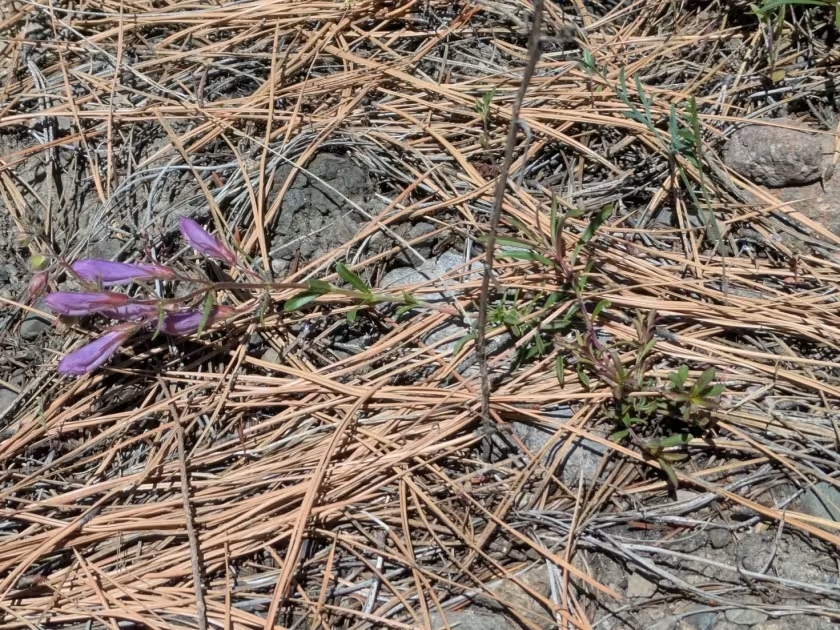
Scouler's penstemon (Penstemon scouleri) is a perennial subshrub belonging to the Plantaginaceae family. It is native to the Pacific Northwest of North America, where it thrives in rocky, well-drained environments.
The plant requires well-draining soil, ideally sandy or gravelly, to prevent root rot. It is perfectly adapted to dry conditions and does not tolerate waterlogged soil, especially during the dormant winter period.
Optimal growth is achieved in full sun, as the plant needs intense light to maintain its compact habit and produce abundant lavender or pink flowers. It is highly valued for its hardy nature and cold tolerance.
This species is widely used in rock gardens, scree beds, and as a low-maintenance border plant. Its semi-evergreen foliage adds structural interest to the garden throughout the year, even when not in bloom.
Maintenance involves light pruning after the flowering season to keep the plant dense and tidy. Minimal fertilization is required, as the plant prefers leaner soils and can be stressed by excess nutrients.
Main diseases and pests
The most common threat to Scouler's penstemon is root and crown rot, which occur when drainage is insufficient. Ensuring the plant is situated on a slope or a raised bed is essential for long-term survival.
Aphids can colonize the plant tips during the spring, leading to distorted growth. Inspecting the plants regularly allows for manual removal or the application of insecticidal soap if an infestation is detected.
Powdery mildew can affect the foliage if there is poor air circulation. Planting specimens at an appropriate distance from one another is a key preventative measure against this fungal disease.
Slugs and snails may attack young shoots in moist spring weather. Spreading coarse grit or crushed shells around the base of the plant can deter these pests effectively without toxic chemicals.
Spider mites can become an issue during periods of prolonged heat and drought. Ensuring the plant remains in a well-ventilated spot helps to mitigate the conditions that favor mite outbreaks.