
Rocky Mountain Penstemon
Penstemon mensarum
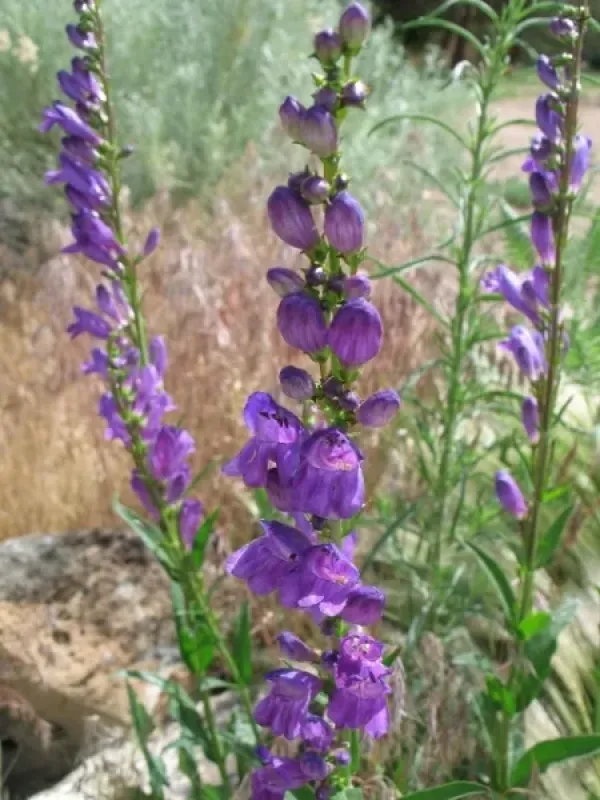
Description
Sowing dates
Seeds of Penstemon mensarum are typically sown in late autumn in open ground or in containers to undergo mandatory stratification. To improve germination rates, it is recommended to keep the seeds in a cold environment at temperatures between +1 and +5 degrees Celsius for 4 to 6 weeks.
When sowing in greenhouses in spring, ensure high-quality drainage of the substrate to prevent seed decay. Sowing is performed superficially, lightly covering the seeds with fine sand or vermiculite, as light is required for successful germination.
The optimal time for transplanting seedlings to their permanent location is the second half of spring, once the threat of late frosts has passed. The plant develops quite slowly during the first year, focusing mainly on establishing a basal rosette of leaves.
Rooting stimulants can be used to accelerate growth, but moderation is essential to avoid excessive vegetative growth at the expense of winter hardiness. The spacing between plants should be at least 30 to 40 centimeters to ensure adequate airflow.
Rocky Mountain Penstemon belongs to the Plantaginaceae family and is a perennial herbaceous plant. In its native habitat, it grows on alpine meadows and slopes, which dictates its biological characteristics as a resilient mountain crop.
Growing requirements
The crop has strict requirements for soil drainage; waterlogging is fatal to the root system. Ideal substrates are light, rocky, or sandy soils with a neutral to slightly alkaline pH level.
The plant is photophilous, so for industrial or ornamental cultivation, sites with full sun exposure should be chosen. In the shade, stems become elongated and lose structural integrity, and flowering becomes less intense and shorter-lived.
The temperature regime includes high resistance to low temperatures, which is characteristic of its alpine origin. However, in regions with snowless winters and sharp temperature fluctuations, light mulching of the root zone is required.
Irrigation must be moderate; Penstemon mensarum possesses inherent drought tolerance developed through evolution in moisture-deficient environments. Excessive use of fertilizers, especially nitrogen, is highly undesirable as it reduces the plant's natural resilience.
The species is not demanding regarding soil fertility; in fact, an excess of organic matter leads to lodging of the flowering stalks and shortens the lifespan of the perennial. Phosphorous-potassium fertilizers are only justified during the budding stage.
Main diseases and pests
The primary threat to the crop is root rot, which develops under conditions of excessive soil moisture. To prevent this, it is necessary to follow standard planting protocols and ensure good substrate aeration.
Pests such as aphids and spider mites may attack young leaves during dry periods. Upon detection of infestations, treatment with systemic insecticides or broad-spectrum acaricides should be performed.
Leaf spot diseases can occur in dense plantings with poor air circulation. It is recommended to remove affected plant parts and strictly follow the spacing requirements to prevent row closure.
Powdery mildew is rare, appearing mainly in years with abnormally high humidity during the summer months. In such cases, copper-based fungicides or specialized antifungal agents are highly effective.
Nematodes can also become an issue if the soil has not undergone proper disinfection. It is crucial to maintain crop rotation and avoid planting this crop in areas where species susceptible to these pests were previously cultivated.