
Hairy beardtongue
Penstemon hirsutus (L.) Willd.
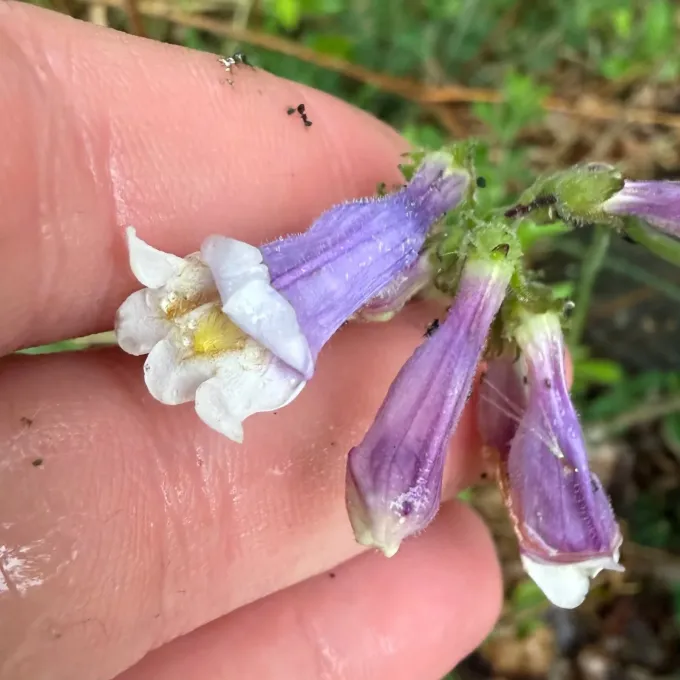
Description
Sowing dates
Sowing seeds of Penstemon hirsutus is most successful when done in late autumn for winter sowing or in early spring for indoor starting. The seeds require a period of cold stratification to break dormancy, making outdoor exposure during winter highly beneficial for germination.
When starting indoors, sow seeds in a well-draining seed-starting mix in late February. Place the containers in a cool location for about 4–6 weeks to mimic winter conditions, then move them to a sunny spot with moderate temperatures to encourage sprouting.
Prick out the seedlings once they develop their first set of true leaves. Since the young plants grow slowly in their juvenile stage, it is crucial to provide adequate light to prevent them from becoming leggy and weak before transplanting.
Transplanting to the garden should occur after the danger of spring frost has passed. Space the plants approximately 30–40 centimeters apart to ensure optimal airflow, which is critical for reducing humidity levels around the foliage.
Vegetative propagation via stem cuttings is another reliable method for expanding your collection. Take green cuttings during the summer months and root them in a mixture of sand and perlite under high-humidity conditions to ensure high success rates.
Growing requirements
Penstemon hirsutus is a member of the Plantaginaceae family and is native to North America. It thrives in open woodlands, rocky slopes, and meadows, which explains its preference for well-draining, slightly nutrient-poor soil compositions.
The plant requires full sun exposure to maintain its compact habit and produce abundant flowers. While it can tolerate partial shade, insufficient light will result in weakened stems and a significant decline in the overall vigor of the plant.
Soil requirements are straightforward: the medium must be gritty, sandy, or rocky to facilitate rapid water drainage. Heavy or clay-based soils are detrimental to the plant, as they promote root rot and prevent the necessary aeration for root development.
In colder regions, provide a light layer of mulch, such as wood chips or conifer boughs, to protect the crown during winter. This prevents damage caused by the freeze-thaw cycles that can heave the plants and stress the root system.
Avoid excessive fertilization, particularly with nitrogen-rich products, as these encourage leafy growth at the expense of floral output. The species is well-adapted to moderate soil fertility and will perform best without intensive chemical intervention.
Main diseases and pests
Root rot is the most common threat to the Hairy Beardtongue, caused primarily by poor soil drainage and stagnant moisture. To mitigate this, ensure the planting site is elevated or amended with grit to allow water to pass through quickly.
Powdery mildew may appear on the leaves during humid or rainy weather, especially if plants are crowded together. Improve air circulation by pruning and applying appropriate fungicidal sprays if an outbreak occurs to prevent further spreading.
Aphids and spider mites are potential pests that frequently attack the succulent foliage of Penstemon. Regular inspection and the use of targeted insecticidal soap or neem oil are effective strategies for keeping these populations in check without harming the plant.
Slugs and snails can target younger, tender leaves during wet spring seasons. Using physical barriers, such as copper tape or crushed eggshells, can protect the plants from these mollusks without resorting to heavy chemical application.
Nematodes are less frequent but pose a serious risk by feeding on the root system. If stunted growth or unexplained wilting occurs, inspect the roots for galls; remove and dispose of affected plants to prevent the spread of the pathogen through the soil.