
Palmer penstemon
Penstemon palmeri A. Gray
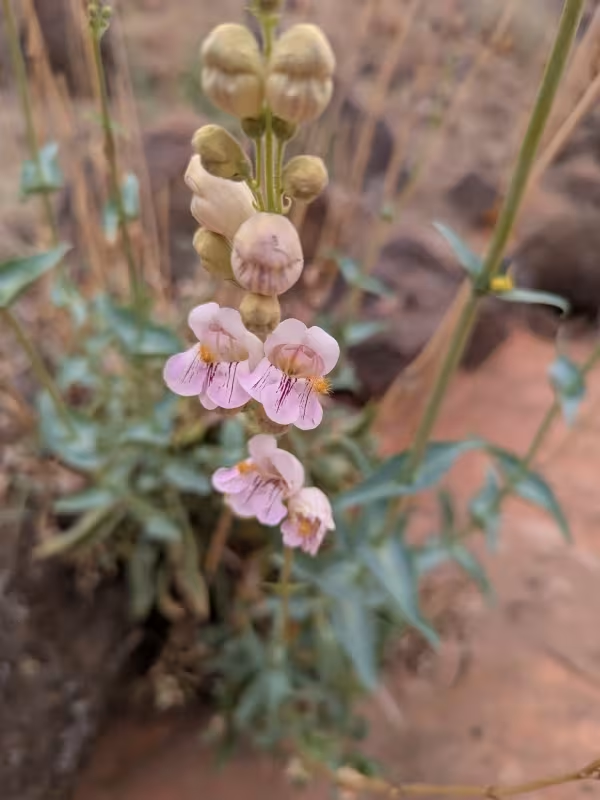
Description
Sowing dates
Palmer penstemon seeds require a period of cold stratification to break dormancy. Sowing in late autumn or early winter allows seeds to naturally undergo this process before spring germination occurs.
When sowing in the field, choose a site with well-draining soil. Seeds should be sown on the surface and barely covered with fine soil, as they need exposure to light for successful germination.
For container propagation, sow seeds in a sterile mix and keep them in a cool, bright area. Seedlings should be handled carefully to avoid damaging the taproot during transplantation to the field.
Spacing should be sufficient to allow air circulation. A typical spacing of 45-60 cm between plants is recommended to prevent competition and allow the plant to achieve its full mature size.
Watering during the germination phase must be consistent but not excessive. Once established, young plants are highly drought-tolerant and require significantly less irrigation than other common crops.
Growing requirements
Penstemon palmeri is a member of the Plantaginaceae family, native to the arid regions of the southwestern United States. It is a highly resilient perennial known for its aromatic, bell-shaped flowers.
The primary soil requirement is excellent drainage. The plant thrives in sandy, rocky, or gravelly soils and will fail in heavy clay soils that retain moisture during the winter months.
This crop prefers full sun exposure and performs poorly in shaded environments. High light intensity is crucial for the plant to maintain its structural integrity and produce a vibrant floral display.
Fertilization should be kept to a minimum. Over-fertilizing, especially with nitrogen, promotes weak, leggy growth and reduces the plant's overall longevity and natural resistance to stress.
Environmental conditions should mimic the plant's natural arid habitat. It is highly resistant to heat and drought, making it an excellent candidate for low-maintenance agricultural or landscape projects.
Yield
In the context of seed production, yield is dependent on pollinator activity. Bees, specifically native species, are the primary pollinators for this plant, and their presence is vital for high seed output.
The plant produces mature seed pods in late summer. Harvest timing is critical, as pods should be collected once they turn brown but before they naturally split and disperse their seeds.
Floral production usually peaks in the second year after planting. Proper site selection and minimal disturbance of the soil contribute to higher biomass and better seed quality in mature plants.
While often grown for ornamental purposes, the species has potential for use in restoration ecology and sustainable landscaping where large-scale seed production is required.
Yield consistency is achieved through a multi-year harvest strategy, as the plant acts as a long-lived perennial under optimal soil conditions and correct management practices.
Main diseases and pests
The most significant threat to the plant's survival is "wet feet" caused by poor drainage. Root rot is a pervasive disease in areas with high precipitation or soil compaction.
Fungal leaf spots can occur during periods of high humidity. Improving spacing to increase airflow around the base of the plant is the most effective cultural method to mitigate these infections.
Pests such as aphids and spider mites may occasionally infest the plant during the growing season. These are rarely fatal but can reduce the plant's vigor if not addressed early.
Rodents or rabbits may occasionally feed on the green foliage, especially in young plants. Protective measures such as small cages may be necessary during the establishment phase.
To keep the crop healthy, avoid over-watering and prune spent flower stalks after the seed harvest. This maintains plant health and reduces the surface area available for potential pathogens.
Harvesting
Seed harvesting should be performed when the pods are fully dried and start to show signs of opening. Using a hand-held collection method ensures that seeds are gathered with minimal loss.
After harvesting, seeds must be thoroughly cleaned to remove chaff and debris. Proper cleaning prevents mold growth during long-term storage in cool, dry conditions.
If the goal is to harvest the entire plant, it should be done after the seeds have dropped or have been collected. Stems can be cut back to the basal rosette to prepare the plant for winter.
Storage of the seed requires airtight containers kept in a dark, cool environment. This maintains viability for several seasons, allowing for consistent planting cycles in future years.
Mechanical harvesting is generally not practiced for this species due to the irregular ripening of pods. Hand-harvesting remains the most efficient method for maintaining seed purity and quality.