
Foxglove beardtongue
Penstemon digitalis Nutt. ex Sims
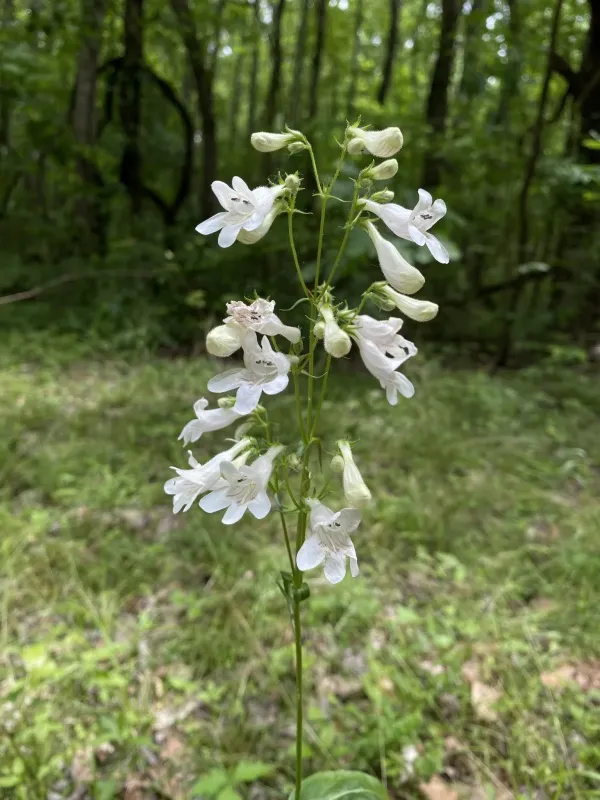
Description
Sowing dates
Seeds of Penstemon digitalis should be sown indoors in late winter or early spring, approximately 8 to 10 weeks before the last frost date.
Cold stratification is essential for these seeds; placing them in a refrigerator at 2–5 degrees Celsius for 4–6 weeks significantly improves germination rates.
Sow seeds on the surface of a light seed-starting mix, pressing them gently into the soil, as they require light to germinate effectively.
Keep the soil moist and maintain a temperature of about 20 degrees Celsius; seedlings typically emerge within 14 to 21 days after sowing.
Transplant the seedlings into individual containers once they have developed at least two sets of true leaves, ensuring they are hardened off before outdoor planting.
Growing requirements
Penstemon digitalis, a member of the Plantaginaceae family, is a hardy perennial native to the eastern parts of North America.
The plant thrives in full sun but can tolerate partial shade, provided it still receives at least six hours of direct sunlight per day.
Well-drained soil is non-negotiable for this species, as it is highly susceptible to root rot when grown in heavy or waterlogged clay soils.
It adapts well to various soil types, including sandy or loamy textures, and prefers a neutral to slightly acidic pH range for optimal nutrient uptake.
This perennial is known for its tolerance to drought once established, though supplemental watering is beneficial during prolonged dry spells in summer.
Main diseases and pests
The primary concern for this crop is fungal disease, particularly root rot, which occurs in areas with poor drainage and excessive moisture levels.
Powdery mildew may manifest as a white film on leaves when air circulation is inadequate or humidity remains constantly high throughout the growing season.
Common pests such as aphids or spider mites can occasionally target the succulent foliage, particularly during the early stages of spring growth.
Effective management strategies include proper spacing to ensure airflow, avoiding overhead irrigation, and using organic insecticidal soaps when pests are detected.
Keeping the garden bed free of debris and weeds reduces the habitat for potential pathogens and promotes a healthier growing environment for the plants.
Harvesting
Harvesting the flowering stalks for floral arrangements is best done when the bottom third of the flowers on the spike have fully opened.
Deadheading faded flower stalks encourages the plant to produce a second flush of blooms, prolonging its attractiveness in the late summer garden.
For seed collection, wait until the seed pods turn dark brown and begin to split, signaling that the seeds inside are fully mature and viable.
Store harvested seeds in a cool, dry place inside paper envelopes to maintain their vitality until the next planting season in the following year.
Prepare the plants for winter dormancy by cutting back the dried foliage to a few inches above the crown once the first hard frost has occurred.