
Smooth beardtongue
Penstemon glaber
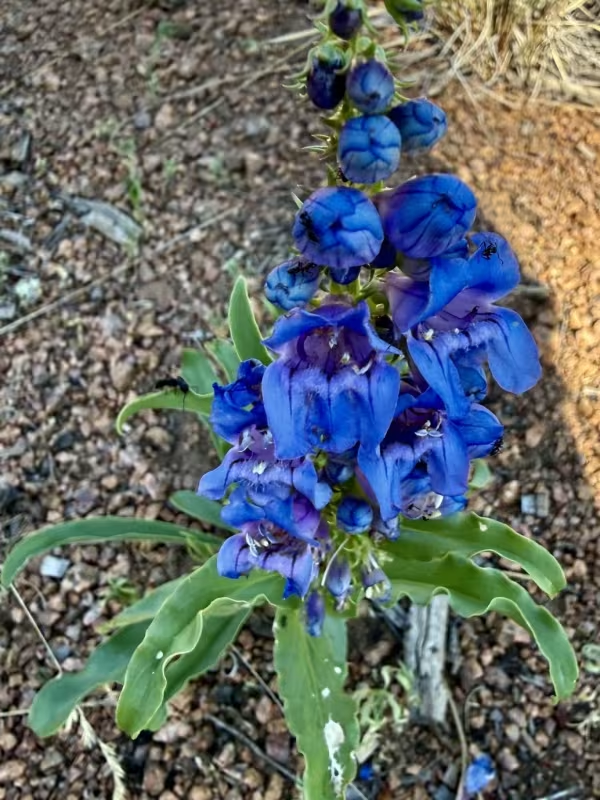
Description
Sowing dates
Sowing seeds of smooth beardtongue (Penstemon glaber), a member of the Plantaginaceae family, is typically done in late autumn for outdoor winter sowing or in spring after cold stratification.
To ensure high germination rates, seeds require a period of exposure to cold temperatures, making early spring sowing after refrigeration a reliable practice for home gardeners.
When sowing, the seeds should be spread thinly on the soil surface and pressed down gently, as they require light to germinate effectively in the early stages of development.
The substrate must be light, porous, and well-draining, commonly using a mixture of peat, perlite, and coarse sand to prevent moisture from settling around the seeds.
Keeping the sowing medium consistently moist but not saturated is crucial for success during the germination period, which usually lasts two to four weeks.
Growing requirements
Native to the Western United States, smooth beardtongue is a hardy perennial perfectly adapted to rocky soils, open prairies, and regions with significant seasonal temperature variations.
The plant thrives in full sun exposure, which is necessary for it to produce a robust display of its characteristic blue-to-purple tubular flowers during the blooming season.
It prefers well-drained, nutrient-poor, or average soils; it struggles significantly in rich, heavy clay soils that retain water and lead to root decay.
Tolerance to dry conditions is a key feature of this species, allowing it to perform well in xeriscapes or rock gardens where other moisture-loving plants might fail.
For maintenance, the soil pH should be neutral to slightly alkaline to mimic the plant's natural habitat conditions, which promotes healthier foliage and faster growth.
Main diseases and pests
The most significant threat to smooth beardtongue is crown rot, caused by stagnant water around the base of the plant, which often happens in poorly drained garden soil.
Powdery mildew can become a concern during humid, stagnant air conditions, resulting in a white fungal film on the leaves that reduces the photosynthetic efficiency of the plant.
Aphids and spider mites are common pests that may infest the plant during hot, dry summer months, focusing their attacks on tender new shoots and buds.
Preventive care includes proper site selection with good drainage and ensuring adequate spacing to allow for airflow, which significantly reduces the pressure from fungal pathogens.
Integrated pest management, including the use of neem oil or insecticidal soaps, is effective for controlling minor pest outbreaks without harming the plant's overall health.