
Eaton's penstemon
Penstemon eatonii
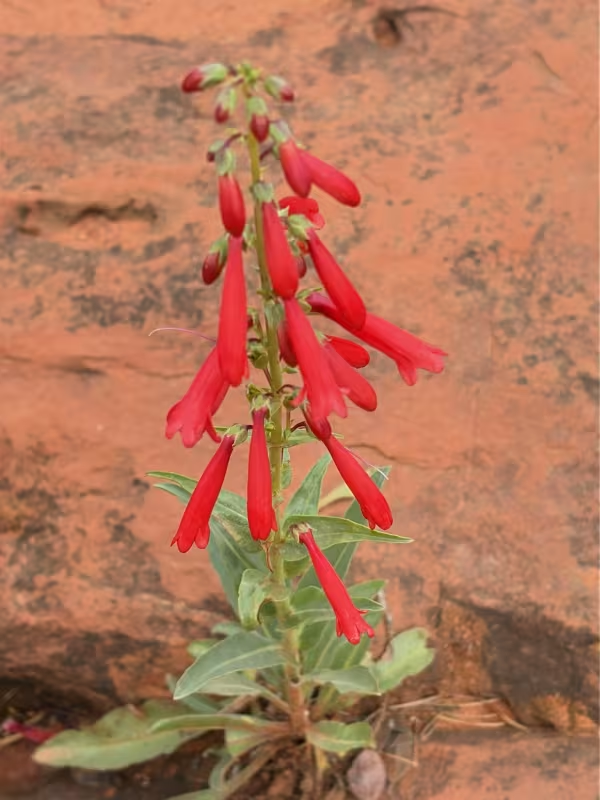
Description
Sowing dates
Sowing Eaton's Penstemon seeds is most effective when done in the fall, allowing the seeds to undergo natural cold stratification throughout the winter.
If planting in the spring, seeds must be artificially stratified in a refrigerator at approximately 4°C for at least two months to break dormancy.
Transplanting seedlings into the garden should occur after the final spring frost to ensure the young plants can establish roots in warm soil.
Seeds should be surface-sown or barely covered with soil, as they require light and consistent moisture to germinate successfully within 3–4 weeks.
Maintaining a weed-free zone around the seedlings is critical during the first growing season to prevent competition for essential light and nutrients.
Growing requirements
Eaton's Penstemon belongs to the Plantaginaceae family and is native to the arid mountainous regions of the southwestern United States.
This species is highly adapted to rocky, coarse soils that provide exceptional drainage, which is the most important factor for its long-term survival.
Full sun exposure is mandatory; the plant will become leggy and produce fewer flowers if grown in partial shade or areas with poor air circulation.
It is remarkably drought-tolerant once established and does not require frequent irrigation, as it is physiologically adapted to desert-like conditions.
- Requires neutral to slightly alkaline soil.
- Avoid high-nitrogen fertilizers to maintain a compact form.
- Ensure excellent airflow to minimize fungal risks.
Main diseases and pests
Root rot is the primary cause of mortality for this species, specifically occurring when soil moisture remains too high during the dormant winter period.
Powdery mildew can infect foliage during periods of high humidity, necessitating the use of fungicides or improved spacing to facilitate drying.
Aphids and spider mites are common pests that may target the inflorescences, causing stunted growth and poor flower production if left untreated.
Volues and rodents may occasionally feed on the root crown during winter, especially if the soil surface is covered by excessive organic mulch.
Proper site selection, focusing on steep or well-drained slopes, significantly mitigates the risk of most biotic and abiotic threats to this plant.