
Davidson's penstemon
Penstemon davidsonii
Description
Growing requirements
Davidson's penstemon (Penstemon davidsonii) is a perennial subshrub belonging to the Plantaginaceae family. Native to the rocky slopes and alpine regions of Western North America, it is a specialized plant adapted to harsh, mountainous environments.
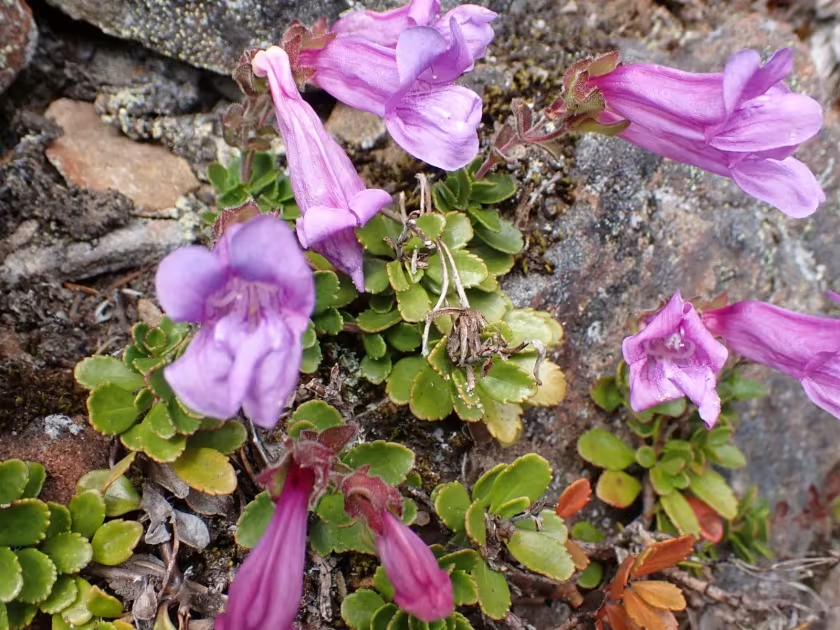
Botanically, this species is characterized by its mat-forming growth habit, rarely exceeding 15 cm in height. It features small, leathery leaves that persist throughout the season, and striking tubular or bell-shaped flowers that bloom in shades ranging from light lavender to deep purple.
To cultivate this species successfully, growers must replicate its natural rocky habitat. The soil must be exceptionally well-draining, preferably a grit-based or sandy mix. Heavy or clay-rich soils are generally unsuitable and lead to rapid root decay if not heavily amended with mineral materials.
Regarding climate, the plant requires full sun exposure to thrive and maintain its compact structure. It is highly cold-hardy, well-adapted to surviving under snow cover during winter; however, in gardens with fluctuating winter temperatures, protecting the crown from excess moisture is essential.
The primary use for Penstemon davidsonii is within ornamental horticulture, specifically in rock gardens, scree beds, and stone troughs. Its ability to thrive in nutrient-poor conditions makes it a valuable asset for creating high-altitude inspired garden displays with minimal maintenance.
Main diseases and pests
The most common agronomic issue is root and crown rot, primarily induced by poor drainage and excessive moisture during the dormant season. Ensuring high aeration around the root zone is the most effective preventative measure against fungal pathogens.
Pests are generally minimal but may include aphids during the spring flush of new growth. Occasionally, soil-dwelling larvae may damage the root system. Proper site selection and avoiding excessive nitrogen fertilization help keep the plants resilient against most biological threats.