
Blue passionflower
Passiflora caerulea L.
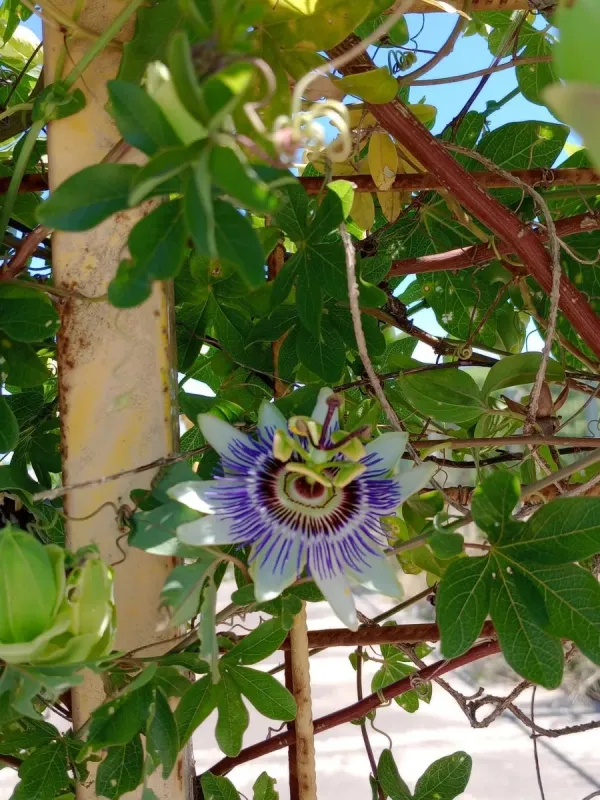
Description
Sowing dates
Propagation of Passiflora caerulea is typically done through seeds or stem cuttings. Seeds should be sown in late winter or early spring using a well-draining, nutrient-rich potting mix.
For better germination results, soak the seeds in warm water for approximately 24 hours. Plant them at a depth of 0.5 to 1 cm and maintain a stable temperature between 22 and 25 degrees Celsius.
Germination can be slow and uneven, sometimes taking several months, so consistent moisture and patience are required. Keep the containers covered to ensure high humidity during this phase.
Cuttings provide a faster way to multiply plants. Take healthy semi-ripe cuttings in the summer and root them in water or a mixture of perlite and peat until a strong root system develops.
Once the young plants have developed a sufficient root system, they should be transplanted into individual pots or outdoors in a sunny location once the danger of frost has passed.
Growing requirements
The blue passionflower (Passiflora caerulea L.) belongs to the Passifloraceae family. It is a vigorous, woody-stemmed perennial vine that utilizes tendrils to climb structures and reach heights of up to 10 meters.
This species requires full sun to bloom effectively. It thrives in fertile, well-draining soils with a neutral pH, avoiding any waterlogged conditions that could lead to root damage.
Regular watering is essential during the active growing season, especially during hot summer days. The plant benefits from occasional misting, which helps mimic its natural tropical environment.
In temperate climates, the blue passionflower is often container-grown. It should be moved indoors before winter temperatures drop below 5 degrees Celsius to protect the plant from freezing.
Routine pruning is a vital part of its care. Removing old or excessive growth promotes better air circulation and stimulates the plant to produce more flowers throughout the summer.
Main diseases and pests
Common pests include spider mites and mealybugs, which are particularly problematic in indoor or greenhouse settings where air circulation may be limited and humidity is low.
Aphids can frequently appear on fresh, new growth, sucking vital sap and distorting the leaves. Insecticidal soaps or neem oil are effective, natural solutions to manage these pest populations.
Root rot is the most common disease, often caused by overwatering or poorly draining soil. To prevent this, ensure that containers have proper drainage holes and do not leave the plant sitting in water.
Nutrient deficiencies, such as chlorosis, may occur if the soil pH is incorrect. Regular fertilization with a balanced, slow-release fertilizer is recommended to maintain the plant's health.
Maintaining a clean growing environment and monitoring for early signs of infestations will prevent major health issues and ensure the longevity of the passion vine.
Harvesting
The fruits of the blue passionflower are oval, orange-yellow berries. While they are technically edible, they are mostly sought after for their ornamental value rather than intense culinary use.
Harvesting should occur when the fruit is fully ripe, identified by a vibrant yellow color and a soft texture. The fruit should detach easily from the vine with minimal resistance.
In culinary applications, the pulp can be extracted to create refreshing juices or jams, although the flavor is less complex compared to other commercial passion fruit species like P. edulis.
Care must be taken when harvesting so as not to damage the main vine structure, as the plant is a perennial and needs its healthy stems to support new growth in the following season.
Once harvested, the fruits should be consumed or processed shortly after, as they do not have a long shelf life and can deteriorate rapidly if stored in warm, humid conditions.