
Purple Passion Flower
Passiflora x violacea Vell.
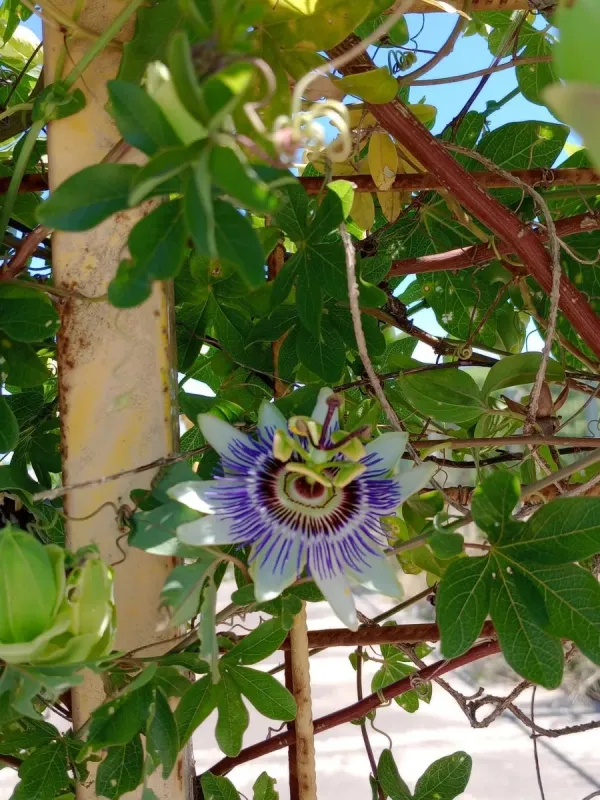
Description
Sowing dates
Purple passion flower, belonging to the Passifloraceae family, is a vigorous perennial climbing vine. Propagation by seed is best initiated in early spring to take advantage of the increasing day length required for strong seedling development.
Before sowing, seeds benefit from scarification and a 24-hour soak in lukewarm water to soften the hard outer seed coat and encourage more uniform germination. Sowing should be done in a light, well-draining starter mix at a depth of approximately 1 centimeter.
Once seedlings emerge, providing supplemental lighting is critical, as these plants are highly photophilic. Pricking out into individual containers should occur once two or three true leaves have developed to ensure adequate space for root expansion.
Vegetative propagation via stem cuttings is frequently preferred in commercial operations to maintain the specific traits of the mother plant. Cuttings are rooted in a sandy or perlite-based medium under high humidity and constant temperatures of +22…+25 degrees Celsius.
Hardening off young plants before transplanting to their permanent location is essential to prevent transplant shock. This process involves gradually exposing the plants to outdoor conditions over the course of one to two weeks before final planting.
Growing requirements
Purple passion flower demands full sun exposure to thrive and produce its signature flowers and fruit. In indoor or greenhouse settings, high-intensity supplemental lighting or placement in southern-facing windows is required to meet its photosynthetic needs.
Soil requirements include a fertile, well-draining medium with a neutral to slightly acidic pH. Incorporating organic matter such as compost or peat moss helps retain necessary moisture while preventing the soil from becoming overly compacted.
Optimal growth occurs at temperatures between +20 and +28 degrees Celsius during the growing season. Winter dormancy is necessary for many varieties, requiring a drop in temperature to +12…+15 degrees Celsius and a reduction in watering frequency.
Regular irrigation is vital during the growing phase; however, over-saturation must be avoided to prevent root rot. Utilizing pots with ample drainage holes and a layer of coarse substrate at the base is standard practice for container-grown vines.
Fertilization regimes should prioritize balanced NPK formulations during the growth phase, transitioning to higher phosphorus and potassium levels as the plant approaches the blooming stage to enhance fruit production.
Main diseases and pests
Spider mites are the most common pest challenge for passion flowers, particularly in low-humidity environments. These mites thrive on the underside of leaves, causing chlorosis and premature leaf drop, which weakens the plant significantly.
Mealybugs can also pose a serious threat, appearing as white cottony masses in leaf axils and stems. Effective management involves consistent monitoring and the application of systemic insecticides or horticultural oils to control population outbreaks.
Root rot, primarily caused by fungal pathogens such as Phytophthora, is often the result of improper drainage or over-irrigation. Maintaining a clean growing environment and ensuring proper air circulation are the best preventative measures.
Powdery mildew may manifest as a white, dusty coating on foliage if ventilation is inadequate and humidity levels are too high. Managing foliage density through regular pruning helps improve airflow and reduces the susceptibility of the vine to this disease.
- Regular monitoring of plant health for early signs of pests.
- Sanitation protocols for pruning tools to prevent cross-contamination.
- Quarantining new plants before introducing them to the main growing area.
Harvesting
Harvesting purple passion fruit requires timing based on color maturity to ensure the best flavor profile. Fruit typically ripens 60 to 80 days after flowering, transitioning from green to a deep, characteristic purple hue when fully ready for consumption.
Fruit should be harvested by cutting the peduncle with sharp shears rather than pulling, which can cause damage to the vine and the delicate skin of the fruit. Mechanical injury to the skin significantly reduces shelf life and market value.
Once harvested, the fruit should be carefully sorted to remove any damaged or underdeveloped specimens. Storage requires stable cool conditions to prevent shriveling, as the high water content of the fruit makes it prone to rapid dehydration.
Due to the perishable nature of the fruit, prompt processing is recommended. The pulp is highly valued in the food industry for its unique aroma, acidity, and nutritional profile, including vitamins and antioxidants.
In industrial scenarios, fruits are often subjected to blast freezing or specialized cooling technology to preserve their organoleptic qualities for longer periods before they are utilized in juices, concentrates, or luxury confectionery products.