
Passiflora kewensis
Passiflora x kewensis Goldring
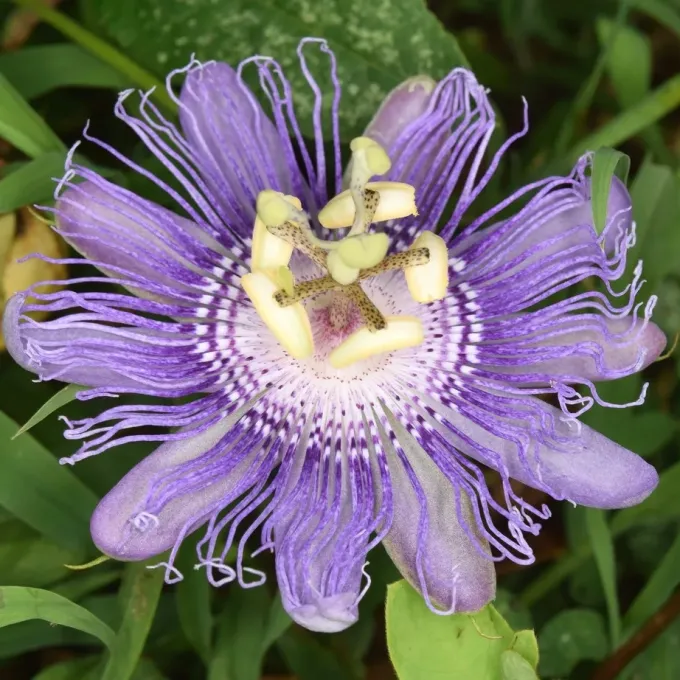
Description
Growing requirements
Passiflora kewensis is a distinctive hybrid belonging to the Passifloraceae family. Created through the hybridization of Passiflora caerulea and Passiflora kermesina, this plant displays the structural beauty of its parent species combined with vigor that makes it a popular choice for conservatory and greenhouse cultivation.
This climber requires high light levels to thrive and produce its signature complex flowers. While it enjoys a warm environment, it should be protected from intense mid-day sun, which can cause dehydration in sensitive foliage. Maintaining stable temperatures between 20°C and 25°C supports optimal growth.
The ideal soil for this species is a well-draining, nutrient-rich mix. A combination of potting soil, coarse peat, and horticultural grit or perlite is recommended to prevent soil compaction and ensure that oxygen reaches the root system, which is vital for the plant's long-term health.
Consistent irrigation is necessary during the growing season, keeping the soil moist but never waterlogged. As the plant enters dormancy, watering should be reduced to prevent root rot. Supplemental feeding with a balanced liquid fertilizer rich in micronutrients is advised throughout the spring and summer months.
In terms of agricultural and horticultural use, Passiflora kewensis is primarily valued as an ornamental vine. It is frequently trained against trellises or supports in botanical gardens and indoor conservatories, where its fragrant, intricate blossoms provide significant aesthetic interest throughout the flowering season.
Main diseases and pests
Common pests include spider mites and aphids, which frequently target the soft, new growth of the vine. Maintaining adequate humidity levels is one of the best preventative measures, though periodic application of insecticidal soap or horticultural oils may be required during an active infestation.
Fungal issues, such as leaf spot or root rot, may occur if air circulation is poor or if the soil remains saturated for extended periods. Pruning to ensure proper airflow and utilizing sterilized potting media are critical steps in maintaining a disease-free plant environment.