
Passiflora x belotii
Passiflora x belotii hort. ex Pépin
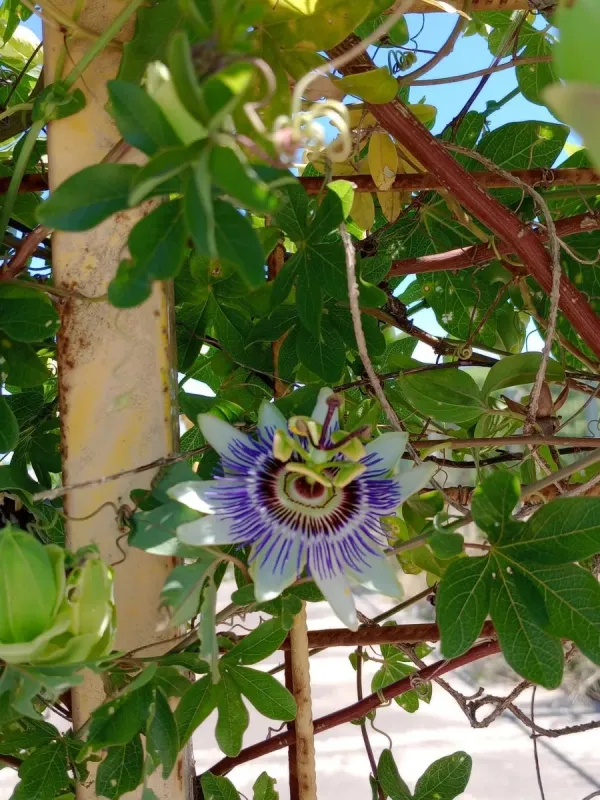
Description
Growing requirements
Passiflora x belotii is a stunning hybrid vine belonging to the Passifloraceae family, resulting from a cross between Passiflora alata and Passiflora caerulea. This plant is highly regarded in horticulture for its large, fragrant, and intricate flowers that exhibit a unique visual appeal.
Cultivation requires a location with bright, indirect sunlight. While the plant can tolerate some morning sun, exposure to intense afternoon heat can cause leaf scorch, necessitating shade during peak summer hours. Maintaining consistent temperatures between 18°C and 25°C is ideal for healthy growth.
The plant thrives in well-draining, nutrient-rich soil. A mix containing peat moss, perlite, and organic compost is recommended to ensure both moisture retention and aeration. Drainage is paramount, as waterlogged soil rapidly causes root rot and other physiological issues.
Regular fertilization is essential during the active growing season. A balanced, water-soluble fertilizer with increased phosphorus and potassium levels encourages robust flowering. It is important to avoid over-fertilizing with nitrogen, which may lead to excessive foliage at the expense of blooms.
Pruning is a critical management practice for this vigorous climber. By cutting back long stems in early spring, gardeners can encourage bushier growth and rejuvenate the plant. The provision of sturdy trellises or supports allows the vine to exhibit its natural climbing habit.
Main diseases and pests
Common pests associated with this species include spider mites, aphids, and mealybugs. These pests frequently thrive in indoor environments with low humidity. Regular monitoring and misting help maintain a microclimate unfavorable to these insects, while neem oil can be used for spot treatment.
Fungal issues, such as root rot and leaf spot, are typical results of overwatering or inadequate air circulation. Ensuring the plant is not kept in damp, stagnant conditions is the most effective way to prevent these pathogens from impacting the vine's health.