
Passiflora setacea
Passiflora setacea DC.
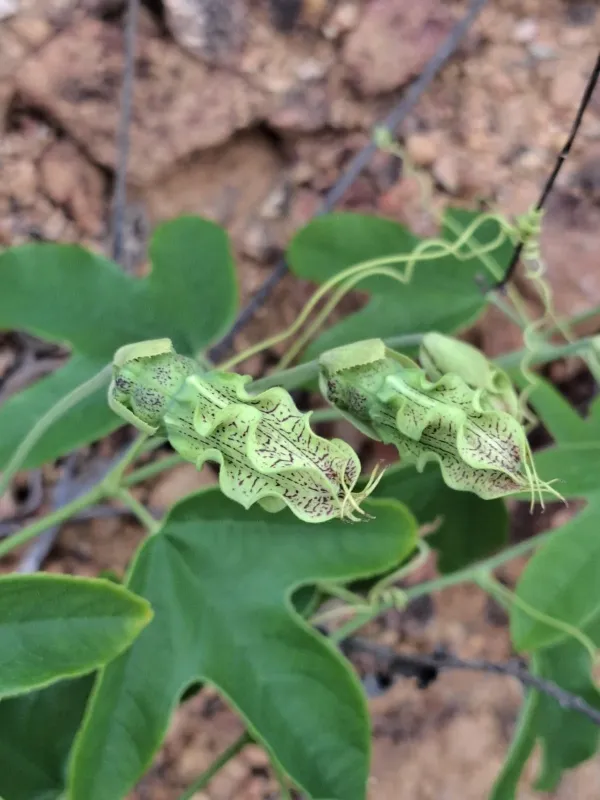
Description
Sowing dates
Passiflora setacea belongs to the Passifloraceae family and is a perennial climbing vine that is primarily propagated via seeds or vegetative cuttings.
Seeds should be sown in a well-drained, sterile substrate at temperatures between 25–28°C to ensure high germination rates and seedling vigor.
Before sowing, seeds may benefit from light scarification to break dormancy and speed up the establishment of the young plants in the nursery phase.
Transplanting the seedlings to individual pots occurs once the first true leaves have developed, ensuring a robust root system before field planting.
Final planting into the soil or greenhouse occurs once all risks of frost have passed and the plants have reached a height of at least 25 cm.
Growing requirements
The plant thrives in full sun exposure, which is essential for healthy vine growth and the successful induction of flowering buds throughout the season.
Well-drained soil rich in organic matter with a pH level between 6.0 and 7.0 provides the best environment for nutrient uptake and root health.
Consistent irrigation is vital, although the substrate must be allowed to dry slightly between waterings to prevent root-zone suffocation and fungal issues.
Optimal temperatures for active growth range from 20°C to 30°C, and the plants must be protected from temperatures dropping below 10°C.
A sturdy trellis or fencing system is necessary to support the fast-growing vines and to allow for proper airflow, reducing the risk of humidity-related pests.
Yield
Yield is highly dependent on effective pollination; in many cases, hand pollination or the presence of specific pollinators is required for fruit set.
From flowering to harvest, the fruit generally takes between 60 to 80 days to mature, depending on solar radiation levels and soil fertility.
Proper pruning practices improve light penetration into the vine canopy, which significantly contributes to higher productivity and larger, healthier fruit sizes.
Commercial yields are optimized through systematic fertilization that addresses phosphorus and potassium levels during the active fruiting period.
The fruit is valued for its specific flavor profile, making it a desirable crop for juice production and culinary applications in local and regional markets.
Main diseases and pests
Common pests include spider mites and aphids, which are particularly problematic in dry greenhouse conditions or during periods of low air movement.
Fungal pathogens such as Fusarium species can cause root rot, especially in poorly drained soils or during prolonged periods of excessive moisture.
Viral infections can cause stunting and leaf distortion; therefore, selecting healthy, certified nursery stock is the most important preventive measure.
Integrated Pest Management (IPM) strategies, including biological control agents, should be prioritized to maintain the ecological health of the crop.
Routine sanitation, including the removal of dead leaves and infected branches, is essential to stop the spread of pathogens throughout the planting site.
Harvesting
Harvesting is performed manually and selectively, choosing only those fruits that have achieved full coloration and indicate maturity through their scent.
Care must be taken to cut the fruit stem cleanly, preventing unnecessary damage to the rind, which preserves the quality during the storage and shipping phase.
Post-harvest handling involves cooling the fruit to stabilize its sugar content and extend shelf life before it reaches the processing or fresh-market facilities.
Passiflora setacea fruits are frequently used in the beverage industry, as well as for making premium jams, jellies, and concentrated extracts.
The best time for harvesting is early in the morning when the air is cool, which helps the fruit maintain its turgor pressure and freshness longer.