
Banana passionfruit
Passiflora mollissima (Kunth) L. H. Bailey
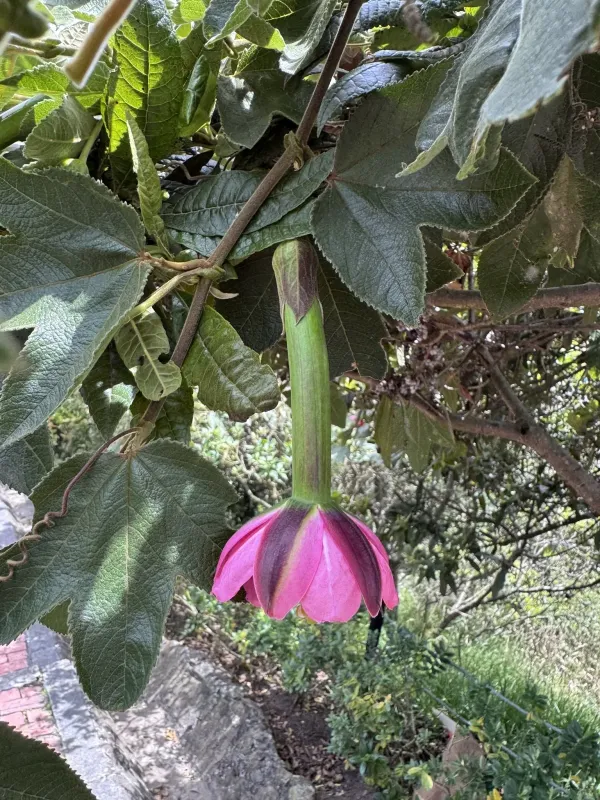
Description
Growing requirements
Banana passionfruit (Passiflora mollissima) is a vigorous climbing vine belonging to the Passifloraceae family. It originates from the high-altitude Andes region, where it has adapted to cool, moist environmental conditions.
Unlike many other passionfruit species, this crop thrives in cooler climates and does not tolerate high heat well. It requires temperatures between 15°C and 22°C to remain productive and healthy.
The plant prefers deep, well-drained, fertile soils with a slightly acidic to neutral pH. It is essential to choose a site that is protected from strong, drying winds to prevent physical damage to the leaves and delicate floral structures.
Trellising is mandatory for commercial cultivation. Providing a sturdy support system ensures maximum fruit exposure to light, improves airflow, and significantly facilitates the harvesting process.
Water requirements are consistent; the soil must remain moist but never waterlogged. Drip irrigation systems are highly recommended to maintain uniform soil moisture levels throughout the growing season.
Yield
The crop is highly valued for its oblong, yellow-orange fruit. The pulp is aromatic and tart, making it a favorite ingredient for gourmet jams, beverages, and diverse dessert applications.
Productivity is impressive, with well-managed vines producing several hundred fruits annually. Fruit maturity is determined by the skin color turning from green to a rich yellow-orange hue.
Commercial potential lies in both fresh market sales and the processed food industry. The fruit has good shelf stability, which allows for distribution in markets far from the production source.
To maximize yields, proper pruning is necessary to remove dead or unproductive wood. This encourages new growth and improves the overall health and vitality of the vine throughout its lifespan.
Harvesting is typically done by hand. Growers must ensure that fruit is harvested at the right stage of ripeness to balance sweetness and flavor profile for the end consumer.
Main diseases and pests
Fungal diseases, particularly those affecting the roots, are a primary concern when cultivation occurs in poorly drained soils. Root rot is a leading cause of plant mortality in such environments.
Pest pressures include aphids and mites, which can cause significant damage to the foliage if left unchecked. Integrated pest management strategies are crucial for maintaining healthy plantations.
Nematodes pose a persistent threat in many regions, directly affecting the plant's ability to absorb water and nutrients. Crop rotation and soil amendments can mitigate these risks.
Viral pathogens may cause leaf mosaic and reduced fruit quality. Prevention is largely based on using healthy, virus-free nursery stock and managing insect vectors effectively.
Regular monitoring of the plantation is the best defense against major outbreaks. Identifying early signs of stress allows for prompt intervention before significant economic loss occurs.