
Scarlet passion flower
Passiflora miniata Vanderpl.
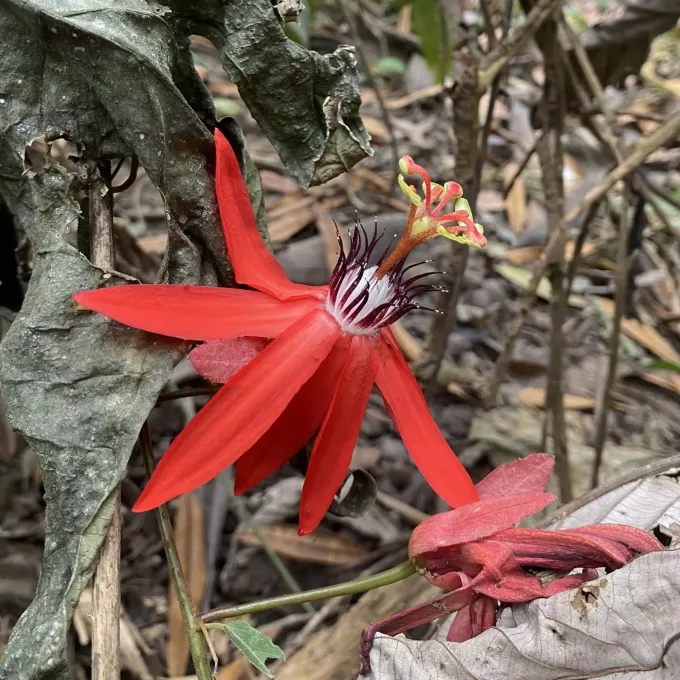
Description
Sowing dates
Sowing seeds of the scarlet passion flower Passiflora miniata is best performed in late winter or early spring, typically between February and March. Seeds have a hard coat, so soaking them in warm water for 24 hours is recommended to improve germination rates.
The optimal temperature for germination ranges between +22°C and +25°C. Seeds should be planted in a light, well-draining substrate composed of peat and sand, and covered with glass or film to maintain stable humidity.
Seedlings usually emerge unevenly, often taking anywhere from 3 to 6 weeks. Once they appear, it is crucial to provide bright, diffused light to prevent the stems from becoming weak and spindly.
Transplanting into individual pots should be done once two pairs of true leaves have developed. Handle young plants carefully, as their root systems are quite fragile during the initial growth stages.
Vegetative propagation via cuttings is a common practice to ensure faster maturation. Semi-hardwood cuttings taken during the summer months root effectively in perlite under high humidity conditions.
Growing requirements
Belonging to the Passifloraceae family, this plant originates from the tropical rainforests of South America. It is a robust, evergreen vine that requires sturdy trellises or supports to grow effectively in a controlled environment.
This species is highly light-demanding. To ensure prolific blooming, it requires plenty of bright, indirect sunlight throughout the day. Insufficient light levels will lead to stunted growth and failure to produce buds.
The ideal growing medium is a loose, fertile, and well-draining soil mix with a slightly acidic to neutral pH. Proper drainage is non-negotiable, as waterlogged soil quickly causes root decay.
Temperature stability is vital, with a preferred range of +20°C to +28°C during the active growing season. The plant is extremely cold-sensitive and should never be exposed to temperatures below +10°C.
Maintaining high ambient humidity, ideally above 60-70%, is essential for the scarlet passion flower. Regular misting or the use of humidifiers is recommended, especially in indoor settings during winter.
Main diseases and pests
Spider mites are the most common pest, thriving in the dry indoor air. If detected, treating the plant with acaricides and regular foliage rinsing is necessary to manage the infestation effectively.
Aphids often target tender new growth and developing flower buds, causing deformation. The use of systemic insecticides provides excellent control against these sap-sucking insects.
Root rot remains a major threat, usually triggered by overwatering or soil compaction. Preventing this requires diligent monitoring of soil moisture and ensuring the plant has adequate aeration.
Powdery mildew can occur if the plant is kept in an environment with poor air circulation or drastic temperature fluctuations. Treatment involves removing affected leaves and applying fungicides.
Nematodes can pose a risk to the root system, particularly in warm, humid conditions. Using high-quality, sterilized potting soil significantly reduces the risk of these soil-borne pests.