
Passiflora Insignis-Mixta
Passiflora insignis x Passiflora mixta
Description
Growing requirements
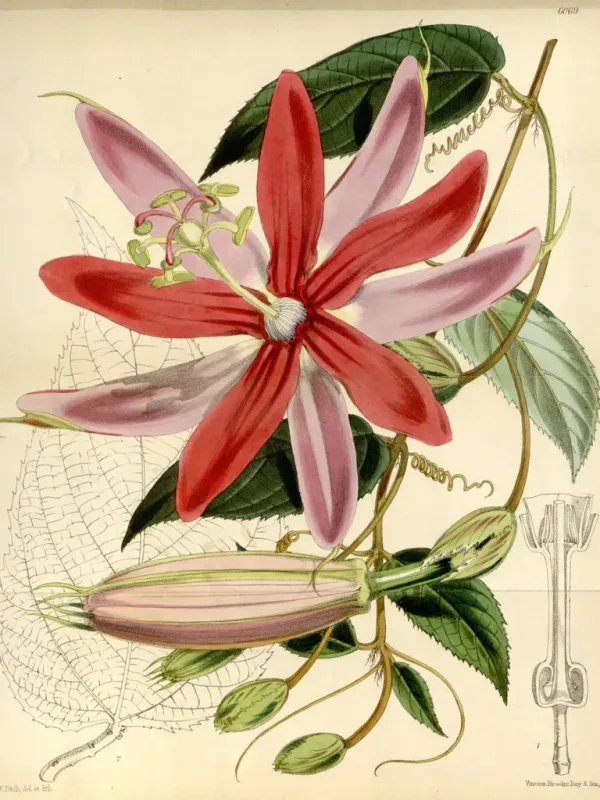
Passiflora Insignis-Mixta (Passiflora insignis x Passiflora mixta) is a hybrid plant belonging to the Passifloraceae family. It is a vigorous, climbing vine that blends the dramatic floral traits of P. insignis with the cold-hardier, high-altitude characteristics of P. mixta.
The culture thrives in cool to temperate tropical climates, specifically mimicking its native Andean habitat. Ideal growth occurs in environments where temperatures remain between 15°C and 22°C, as the plant is sensitive to sustained high heat that can scorch the foliage.
Soil requirements for this hybrid include a high-quality, well-draining substrate rich in organic matter. A slightly acidic to neutral soil pH level is essential for ensuring that the plant effectively absorbs micro-nutrients required for lush leaf and flower production.
Regarding light, this passion flower prefers bright, filtered sunlight. While it needs significant energy to produce its large, complex blooms, exposing it to harsh, direct midday sun often results in leaf chlorosis or tissue damage, especially in greenhouse environments.
Agronomic management requires the installation of sturdy support structures, as the vine possesses strong, reaching tendrils. Routine pruning is recommended to maintain plant density, improve airflow, and ensure that new growth receives adequate sunlight for optimal flowering.
Main diseases and pests
The most common pests affecting this hybrid are spider mites and whiteflies, which thrive in stagnant, dry air conditions often found in improperly ventilated greenhouse cultivation.
Root rot, primarily caused by fungal pathogens like Phytophthora, remains the most significant threat to plant health. This condition is usually a direct consequence of poor drainage or excessive irrigation frequency.
Integrated pest management strategies should focus on maintaining consistent humidity levels and using preventative biopesticides to keep insect populations below the economic threshold.
Proper sanitation is critical; removing diseased foliage and ensuring that tools are disinfected regularly helps prevent the spread of fungal spores and viral infections within the crop.
Monitoring the plant for signs of stress, such as yellowing leaves or stunted growth, allows for early intervention before a localized issue becomes an infestation or a total crop failure.