
Passiflora insignis
Passiflora insignis (Mast.) Hook. f.
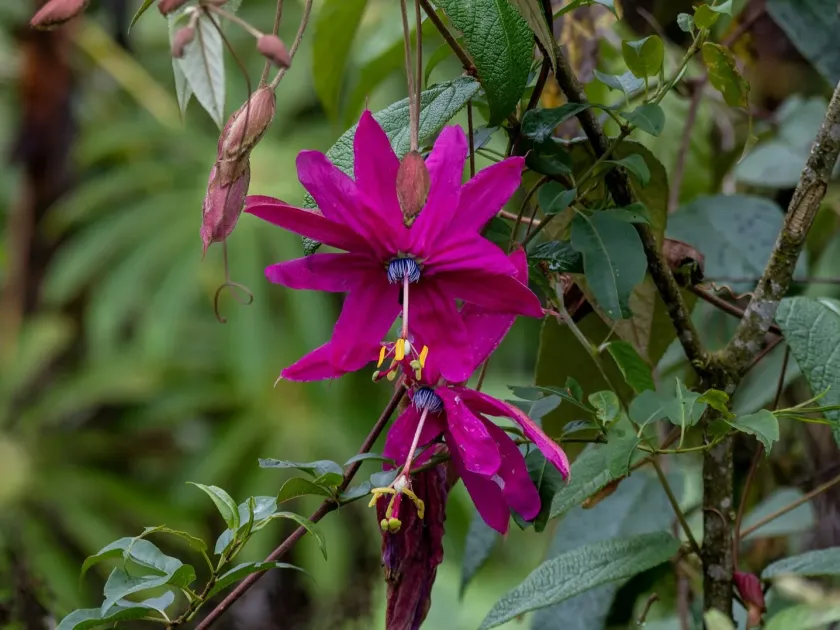
Description
Growing requirements
Passiflora insignis is a vigorous evergreen vine belonging to the Passifloraceae family. It is native to the cloud forests and mountain regions of South America, specifically thriving in the humid conditions of Ecuador and Peru.
This species requires a consistent tropical climate to flourish. The ideal temperature range for active growth is between 18 and 26 degrees Celsius, with no tolerance for freezing temperatures, making it suitable for greenhouses or tropical gardens.
The soil must be well-drained, nutrient-rich, and slightly acidic to neutral in pH. A mixture of peat, perlite, and organic compost is generally recommended to balance moisture retention with the necessary aeration for root health.
Light requirements are significant: the plant prefers bright, filtered light. Direct, harsh sunlight can damage the leaves, while insufficient light leads to sparse growth and reduced flowering potential.
Agrotechnical practices involve providing a sturdy support structure, such as a trellis, to manage its fast-growing, woody stems. Regular liquid fertilization during the growing season is essential to support its rapid development and large foliage.
Main diseases and pests
Spider mites represent a major threat to this species, especially in environments where humidity levels fluctuate. They thrive in dry air, causing leaf yellowing and eventual defoliation if left untreated.
Root rot is the most common physiological challenge, usually caused by over-watering or poor soil drainage. Maintaining a proper irrigation schedule is critical to preventing the proliferation of soil-borne fungi.
Mealybugs can infest the nodes and undersides of the leaves, drawing sap and weakening the plant. Physical removal or the application of horticultural oils is effective for managing these pests in small collections.
Fungal leaf spot diseases occur when foliage remains wet for extended periods without adequate air circulation. Improving ventilation and spacing between plants are the best preventative measures against these pathogens.
Scale insects may also impact the stem growth by piercing the bark. Regular inspection and the use of targeted insecticides or systemic treatments ensure the long-term vitality of the vine.