
Passiflora gibertii
Passiflora gibertii N.E.Br.
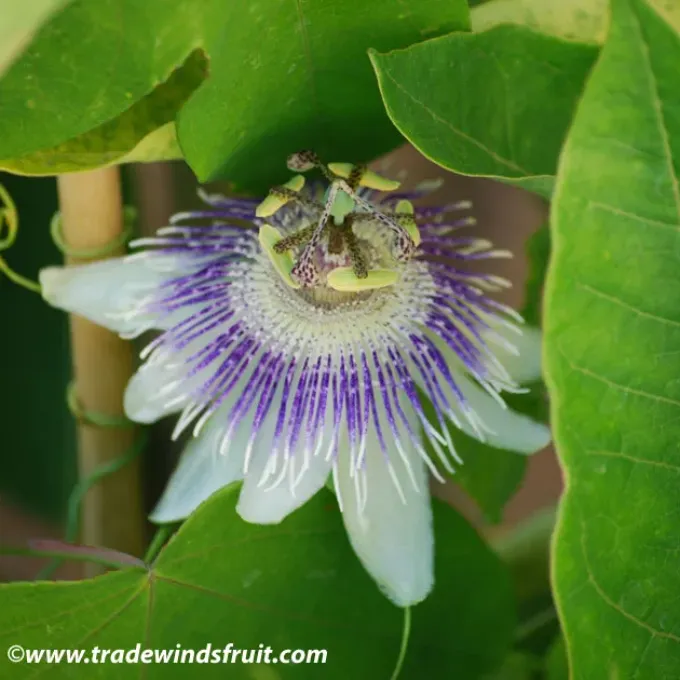
Description
Sowing dates
Sowing Passiflora gibertii seeds is best performed in early spring, as increasing day length provides the necessary energy for rapid germination and seedling development.
Seed coats are relatively hard, so scarification using fine sandpaper or a pre-soak in warm water for 24 hours significantly improves the germination rate.
A well-drained, sterile peat-based medium is ideal for sowing. Seeds should be planted at a depth of about 1 cm and kept in a warm environment (25–28°C).
Consistent humidity is crucial during the germination phase; covering the seed tray with plastic wrap or using a propagation chamber helps maintain the required moisture level.
Once seedlings have developed their second set of true leaves, they should be carefully transplanted into larger pots to ensure sufficient room for root expansion.
Growing requirements
Passiflora gibertii is a vigorous perennial vine belonging to the Passifloraceae family, originating from the subtropical regions of South America.
The plant thrives in full sun but requires protection from intense midday heat, which can cause leaf scorch in sensitive young specimens.
Regarding soil, it prefers a rich, slightly acidic to neutral substrate with excellent drainage properties to prevent root asphyxiation during heavy watering.
Temperature management is critical; as a tropical species, it requires temperatures above 15°C for optimal growth and will not tolerate frost or cold drafts.
Vertical training is essential for this species. Using trellis systems or wires allows for proper air circulation throughout the foliage, which reduces the incidence of disease.
Yield
Passiflora gibertii is cultivated for its edible fruits, which are highly regarded for their distinct flavor profile and nutritional properties, including antioxidants.
Yield performance is heavily linked to fertilization; applying balanced, slow-release fertilizers during the active growing season promotes both vegetative growth and fruit set.
Harvesting should occur when the fruit color fully matures. Depending on the variety, this is often indicated by a slight softening of the rind and a fragrant aroma.
The fruit has significant potential for processing into juices, jams, and culinary additives, making it a viable specialty crop for controlled environment agriculture.
Proper pruning after the main harvest is recommended to stimulate new growth, which ensures consistent productivity for the following growing season.
Main diseases and pests
The most common pests affecting Passiflora gibertii include spider mites, which thrive in dry conditions and can quickly infest the undersides of leaves.
Aphids and mealybugs are also persistent threats, often clustering on tender new shoots and buds, causing stunted development and the spread of viral pathogens.
Root rot, primarily caused by Pythium or Phytophthora species, is the most common disease factor, usually stemming from poor drainage or excessive soil moisture.
Fungal leaf spots can occur if the humidity levels are too high without adequate air movement; therefore, ensuring a ventilated canopy is a primary preventative measure.
Integrated pest management (IPM) practices, including regular monitoring and the use of insecticidal soaps, are recommended to maintain plant health without damaging the fruit quality.