
Paronychia polygonifolia
Paronychia polygonifolia
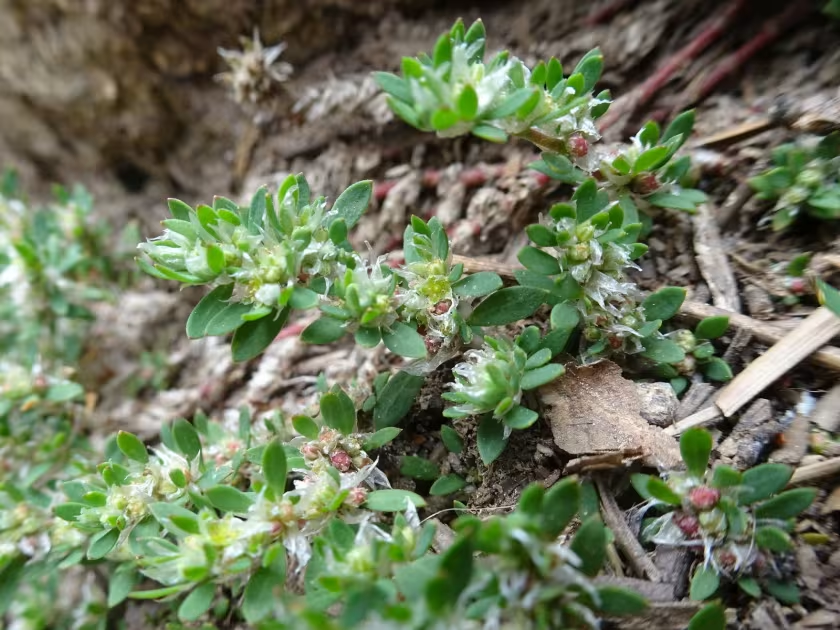
Description
Growing requirements
Paronychia polygonifolia is a perennial herbaceous plant belonging to the Caryophyllaceae family. In agronomy and ornamental horticulture, it is recognized for its role as a hardy, low-growing groundcover suitable for alpine-style environments.
The plant originates from the mountain ranges of Southern Europe, particularly the Pyrenees. It has evolved to thrive in rocky, barren soils and high-altitude climates, making it an excellent candidate for xeriscaping or sustainable landscape management in poor soils.
Botanically, this species is characterized by its mat-forming growth habit. The leaves are narrow and resemble those of the genus Polygonum, which provides the inspiration for its specific epithet. The flowers are clustered and surrounded by persistent, papery bracts that give them a unique appearance.
Cultivation requirements focus heavily on soil structure; it demands extremely well-draining, gritty, or sandy substrate. Heavy clay soils or areas with poor water permeability are unsuitable, as they lead to root suffocation and rapid decay of the plant tissues.
The species is strictly heliophilic, requiring full sun exposure to maintain its compact, cushions-like form. Insufficient light results in etiolation of the stems, making the plant less resilient to environmental stressors and more susceptible to fungal pathogens due to microclimate humidity.
Main diseases and pests
The primary threats to Paronychia polygonifolia are fungal infections related to root rot. These occur predominantly when the soil moisture levels exceed the plant's physiological tolerance, causing rapid deterioration of the root structure.
Regarding pest management, the plant is relatively robust but can be prone to aphids and spider mites if the plants are stressed or grown in poorly ventilated areas. Regular observation is necessary to ensure early intervention if infestations occur.