
Paronychia capitata
Paronychia capitata
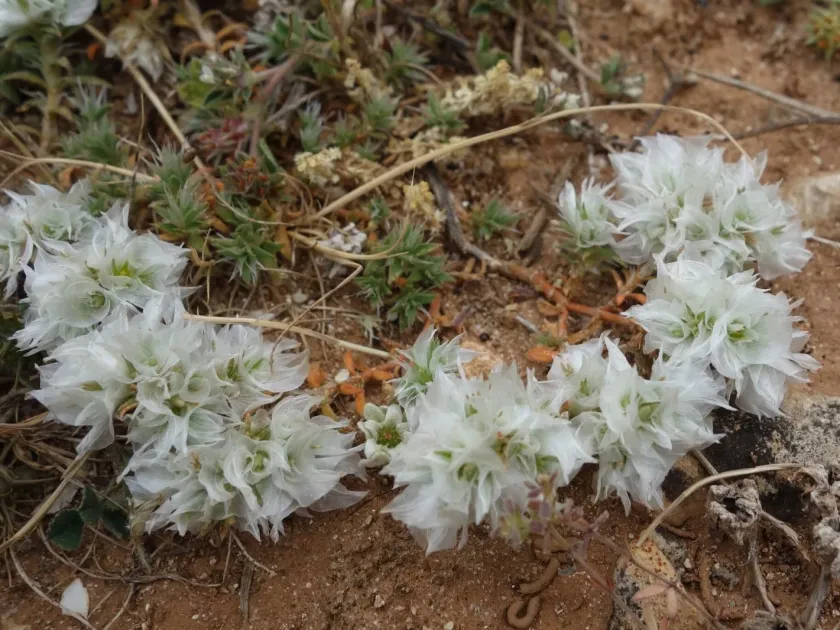
Description
Growing requirements
Paronychia capitata, commonly known as a type of nailwort, is a herbaceous perennial plant belonging to the Caryophyllaceae family. It is native to the Mediterranean basin, where it typically thrives in arid, rocky environments and calcareous outcrops.
The plant exhibits a mat-forming growth habit with sprawling stems covered in tiny, often silvery-pubescent leaves. This morphology is a direct adaptation to high-intensity solar radiation and low soil moisture availability, common in its natural range.
Agronomic success with this species strictly requires well-drained, gritty, or sandy soils. It is highly intolerant of waterlogged conditions, which promote crown rot and significantly reduce plant vigor within a single growing season.
The crop requires full sun exposure to maintain its compact habit and health. It is exceptionally drought-tolerant once established and does not require frequent irrigation, making it suitable for low-input agricultural systems in arid climates.
During the establishment phase, manual weed control is essential as the plant has a slow initial growth rate and cannot compete with aggressive weeds. Once a dense mat is formed, the culture serves as an effective ground cover.
Main diseases and pests
The primary threats to Paronychia capitata are fungal pathogens, specifically those causing root and collar rot. These occur almost exclusively when drainage is inadequate or atmospheric humidity remains high for extended periods.
Pest pressure is generally low; however, infestations of spider mites may occur during periods of extreme heat and dry air, necessitating localized monitoring to prevent significant damage.
Nutritional imbalances, particularly those caused by excessive nitrogen application, can lead to succulent growth that is highly susceptible to fungal infections and winter injury.
Poor aeration in the root zone is the leading cause of crop failure. Ensuring an open soil structure is the most effective preventative measure against physiological and pathological decline.
Integrated pest management should focus on cultural practices rather than chemical interventions, as the plant is sensitive to various synthetic pesticides often used in general horticultural practice.