
Paronychia arabica
Paronychia arabica
Description
Growing requirements
Paronychia arabica is a herbaceous plant belonging to the Caryophyllaceae family. It is recognized for its ability to thrive in harsh, arid environments, forming low-lying, mat-like structures that effectively cover the ground.
Originating from the Mediterranean basin, North Africa, and parts of the Middle East, this plant is well-adapted to high sunlight exposure and extreme temperature fluctuations. Its natural habitat consists primarily of rocky slopes and sandy plains.
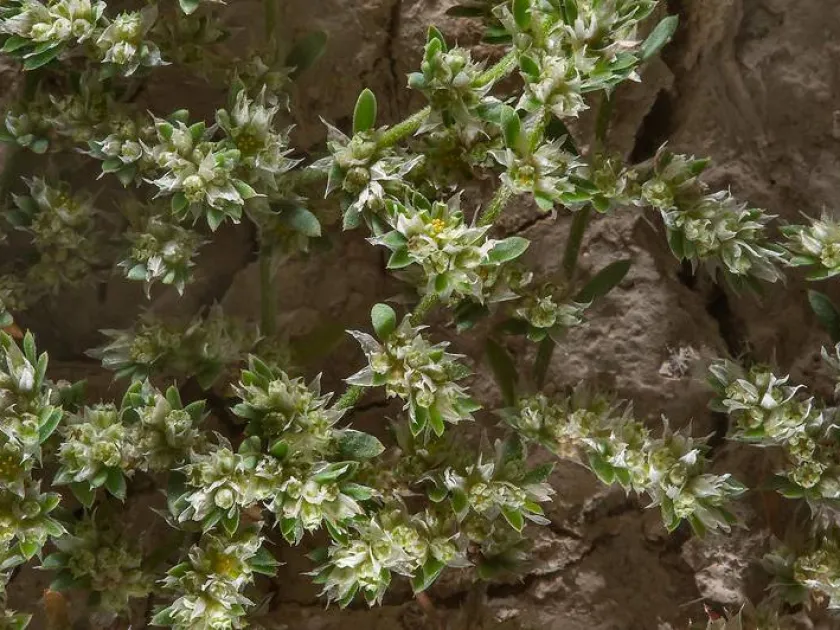
The botanical structure of this species features silver-tinted foliage covered in fine hairs to mitigate transpiration. The tiny, white-bracted flowers are distinct, contributing to the plant's aesthetic value in arid landscaping.
Cultivation requires well-draining soil, ideally of a sandy or stony composition. Paronychia arabica demands full sun and is highly intolerant of waterlogged conditions, which can quickly lead to root decay.
In terms of practical use, it serves as an excellent candidate for xeriscaping, providing a durable ground cover that stabilizes soil against wind erosion. Its resilience to nutrient-poor soil makes it a sustainable choice for rocky gardens.
Main diseases and pests
The primary threats to Paronychia arabica are fungal diseases, specifically root and crown rot, primarily induced by excess moisture. Improving drainage is the most effective management strategy for maintaining plant health.
Pests such as aphids or spider mites may occur in low-ventilation environments or greenhouse settings. However, in outdoor arid settings, the plant is generally robust and requires minimal intervention to maintain its vitality.