
Albanian whitlow-wort
Paronychia albanica
Description
Growing requirements
Albanian whitlow-wort (Paronychia albanica) is a perennial herbaceous plant belonging to the Caryophyllaceae family. Naturally occurring in the Balkan mountain regions, this plant is well-adapted to surviving in rocky, nutrient-poor substrates, reflecting its evolutionary strategy as a lithophyte.
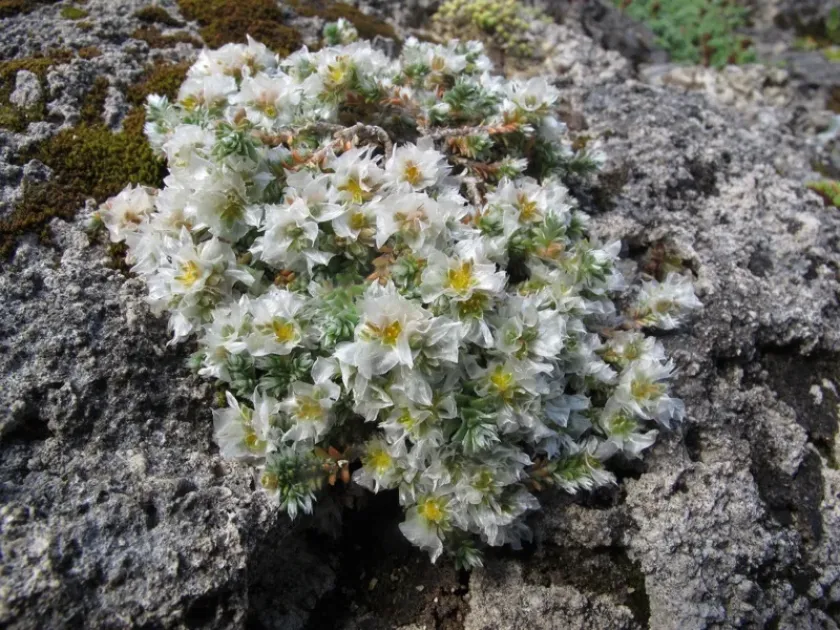
The plant exhibits a mat-forming growth habit, producing compact clusters of small leaves adorned with distinctive silver-white papery bracts. These bracts are the primary decorative feature, giving the plant its characteristic metallic, silvery appearance that remains attractive throughout the growing season.
Successful cultivation requires specific soil conditions characterized by excellent drainage and a neutral to slightly alkaline pH. Clay soils or those that retain significant moisture must be avoided, as the root system of Paronychia albanica is highly susceptible to hypoxia and fungal decay in waterlogged conditions.
In terms of climatic requirements, this species is a sun-loving plant that thrives in high light intensity. It is exceptionally drought-tolerant once established, making it suitable for xeriscaping or dry gardening projects in regions with significant temperature fluctuations between day and night.
Commercially and horticulturally, the plant is primarily utilized in alpine gardens, rock walls, and as a groundcover in dry areas where traditional lawn grasses would fail. Its ability to colonize small gaps makes it a popular choice for sustainable urban greening and ecological landscaping.
Main diseases and pests
The primary threats to Paronychia albanica are root-rot pathogens, such as Rhizoctonia or Phytophthora, which thrive in poorly drained soil environments. Proper site selection and the use of inorganic mulch, such as grit or limestone chippings, are essential preventive measures.
Pests are generally not a significant issue for this plant, although snails and slugs can occasionally cause cosmetic damage during the rainy spring months. Maintaining a dry, open environment around the base of the plant is usually sufficient to discourage these pests from establishing themselves.