
Silver nailwort
Paronychia argentea
Description
Growing requirements
Silver nailwort (Paronychia argentea) is a perennial herbaceous plant belonging to the Caryophyllaceae family. It is native to the Mediterranean basin, where it thrives in arid and semi-arid environments on rocky or sandy substrates.
The plant is highly heliophilous, requiring full sun exposure to maintain its characteristic compact growth habit and silver-colored bracts. It struggles to compete in shaded areas, making site selection a critical factor for successful cultivation.
Regarding soil, Paronychia argentea requires excellent drainage and thrives in nutrient-poor, rocky, or limestone-based soils. It is remarkably drought-tolerant, utilizing a deep taproot system to access moisture in dry, challenging conditions.
In terms of climate, it is well-adapted to hot, dry summers and can withstand occasional frost typical of Mediterranean climates. However, high winter humidity combined with low temperatures can be detrimental, often causing root rot.
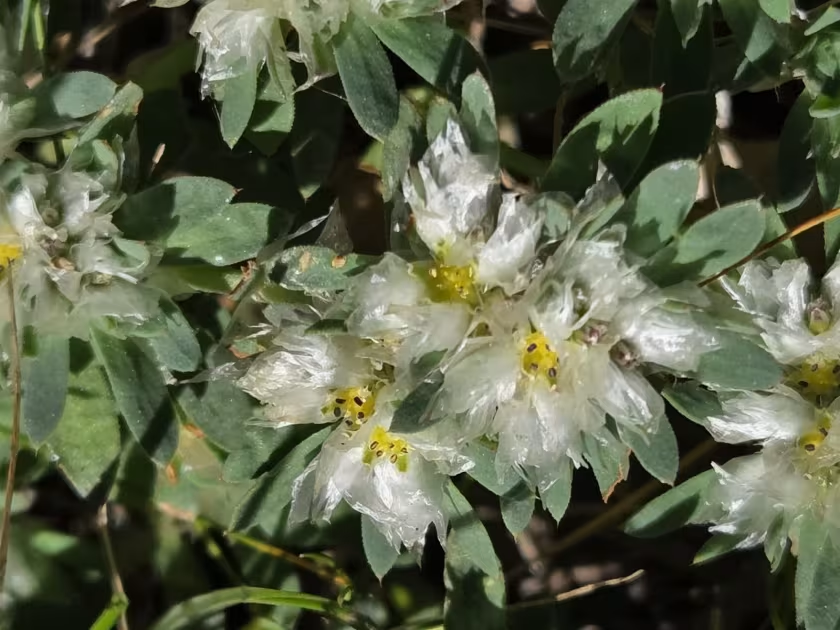
Botanically, the plant features prostrate stems covered in small, opposite leaves and dense clusters of tiny flowers surrounded by prominent, silvery-white bracts. These bracts provide the plant's ornamental appeal and distinct visual identity.
Harvesting
The harvesting of silver nailwort is primarily focused on gathering the aerial parts for herbal use. Harvesting should be performed during the peak flowering stage when the concentration of bioactive compounds is at its highest.
Standard harvesting practices involve cutting the stems carefully at the base, ensuring that the root system remains undisturbed. This allows the plant to potentially produce new growth or persist for subsequent seasons.
Post-harvest, the plant material must be dried in a shaded, well-ventilated area to preserve its color and active ingredients. High temperatures or direct sunlight during the drying process can degrade the quality of the raw material.
Its primary agricultural and economic use stems from its traditional medicinal application as a diuretic and anti-inflammatory agent. Additionally, it is increasingly popular in xeriscaping as a low-maintenance ground cover.
Storage of the finished product requires cool, dry conditions away from light. Proper packaging, such as breathable paper bags, helps to prevent moisture accumulation and maintains the potency of the dried herb for future use.