
Paronychia kapela
Paronychia kapela
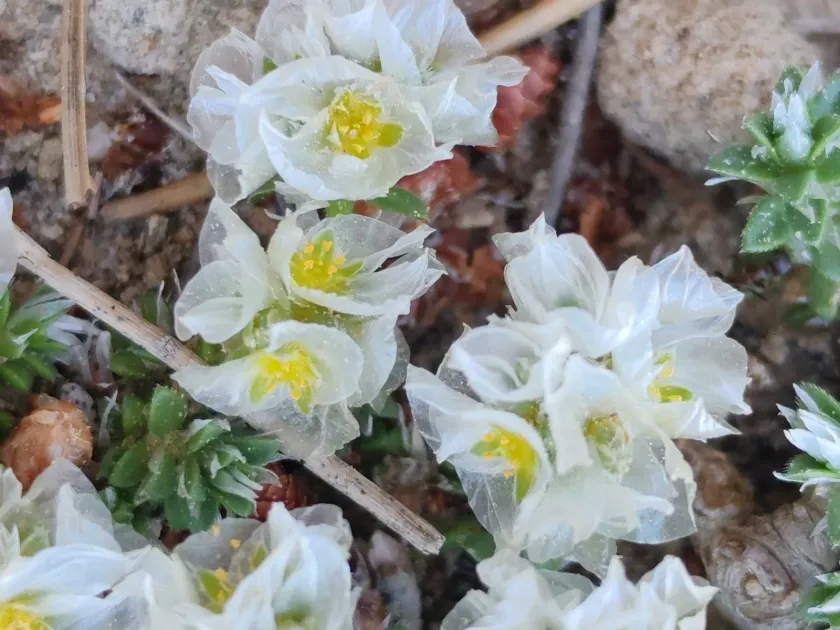
Description
Growing requirements
Paronychia kapela belongs to the Caryophyllaceae family. This perennial herbaceous plant typically forms a compact, mat-forming cushion, highly adapted to the harsh conditions of rocky slopes and mountainous terrain.
The plant features distinct silvery-white bracts surrounding tiny flowers, creating a visually striking silvery carpet effect. It has a robust taproot system that allows it to anchor firmly in rock crevices and access moisture deep within the substrate.
In its natural habitat, the plant prefers well-drained, calcareous, or stony soils with low organic matter content. It is extremely sensitive to waterlogging, and when grown in heavy clay soils, it requires a significant drainage layer of gravel or crushed stone.
For successful development, the crop requires an open, sunny location with full sun exposure. It demonstrates exceptional drought tolerance and is capable of withstanding the significant temperature fluctuations characteristic of Mediterranean high-altitude regions.
In terms of practical use, this species is primarily valued as an ornamental plant for rock gardens, scree slopes, and dry stone walls. It is an excellent choice for low-maintenance, drought-tolerant landscaping projects that do not require frequent irrigation.
Main diseases and pests
Excessive soil moisture is the primary threat to the crop, as it quickly leads to root rot. Careful management of drainage is essential, particularly during periods of high rainfall, to prevent the plant from decaying.
In conditions with poor air circulation, the plants may become susceptible to powdery mildew, especially if planted too close to each other. Ensuring adequate spacing and choosing an airy location is the most effective preventative measure.
Pests such as aphids or spider mites may occasionally infest plants that are already weakened by improper care. Regular monitoring of the foliage ensures that any pest presence can be managed quickly.
Pests rarely cause significant damage to healthy, well-established plants, as the dense structure and rigid leaves make them less appealing to the majority of generalist insects.
To maintain plant health, it is recommended to prune dry stems in the spring and avoid heavy applications of nitrogenous fertilizers, which can produce succulent growth more susceptible to fungal infections.