
Spiny nailwort
Paronychia echinulata
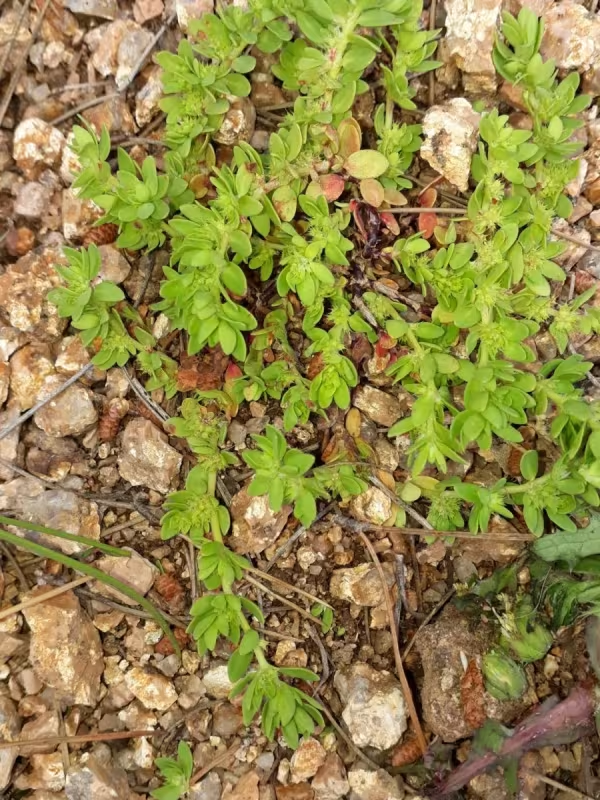
Description
Growing requirements
Spiny nailwort (Paronychia echinulata) is a herbaceous plant species belonging to the Caryophyllaceae family. It is native to the Mediterranean region, where it has evolved to survive in harsh, arid climates.
The plant is categorized as a xerophyte, showing remarkable resilience to high temperatures and prolonged dry spells. It is typically found in open fields with well-drained, nutrient-poor, sandy or stony soils.
Botanically, it forms dense mats or small clusters. The leaves are small and opposite, and the flower clusters are surrounded by scarious bracts that give the plant its characteristic "spiny" or prickly appearance.
For successful growth, it requires full sun exposure and excellent soil drainage. It cannot thrive in waterlogged environments, as its root system is specialized for searching for moisture at greater depths rather than processing surface water.
Its primary agricultural and ecological value lies in land reclamation. It serves as an effective ground cover to prevent erosion in sandy soils and degraded pastures where other vegetation fails.
Main diseases and pests
The most significant threat to the health of the plant is root decay caused by poor drainage. High humidity combined with heavy soil types is almost always fatal to this species.
While generally pest-resistant, the plant can be susceptible to fungal diseases during unusually wet seasons, which can manifest as leaf spots or stem rot at the base of the plant.
Weed management is critical during the establishment phase. Because the plant grows slowly, it can be easily outcompeted by fast-growing weeds that shade the young sprouts.
There are no specific major insect pests documented that target this crop exclusively, though generalist herbivores might browse on it during extreme shortages of other forage.
Effective management strategies focus on selecting well-draining sites and maintaining appropriate spacing to ensure air circulation, which prevents the development of pathogen-friendly microclimates.