
Cenchrus elegans
Cenchrus elegans (Hassk.) Veldkamp
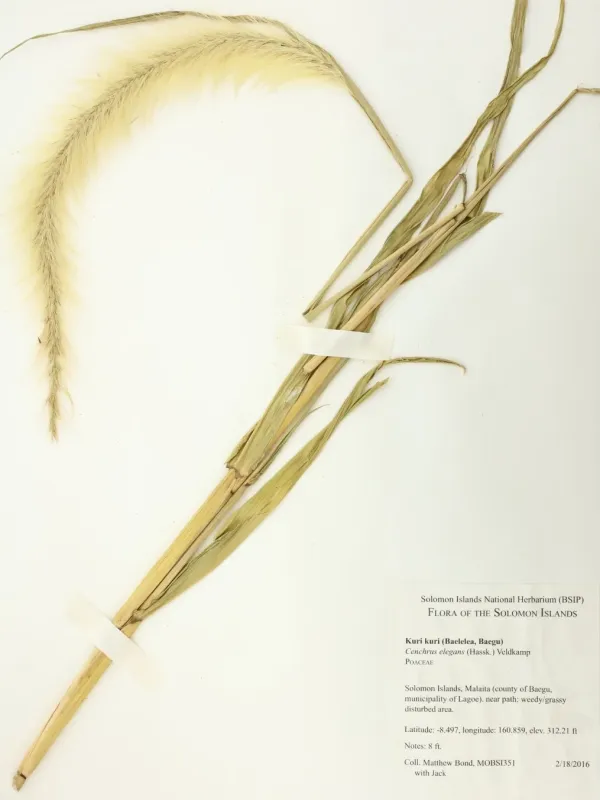
Description
Sowing dates
Cenchrus elegans is an annual or perennial grass species within the Poaceae family, recognized for its potential as a forage crop in various climatic zones.
Sowing should be performed when soil temperatures are consistently above 15 degrees Celsius to ensure rapid and uniform germination of the small seeds.
The spacing between rows is a critical factor, with a recommended range of 45 to 60 centimeters to allow for optimal airflow and weed management.
Seed depth must be strictly controlled, typically staying within 2–3 centimeters, as deeper burial significantly reduces the emergence rate of the crop.
Following the seeding process, soil compaction is advised to enhance capillary water movement toward the seeds, which helps in establishing the initial root system.
Growing requirements
This grass species thrives in full sunlight, making it highly suitable for open agricultural fields where light competition is minimal.
Soil drainage is perhaps the most critical requirement, as this plant does not tolerate waterlogged conditions or saturated root zones.
Neutral to slightly acidic soil conditions are ideal for nutrient uptake, although the species demonstrates a notable degree of tolerance to poor soil quality.
Regular fertilization with balanced nitrogen-rich compounds is recommended during the early vegetative stage to promote robust leaf and stem development.
While known for its heat and drought resistance, supplementary irrigation during prolonged dry spells can significantly increase biomass production.
Main diseases and pests
Fungal infections such as rusts and smuts represent the primary biological threats, particularly during seasons characterized by high humidity and stagnant air.
Insect pests, including aphids and various grass-feeding beetles, may infest the plants, necessitating a structured Integrated Pest Management program.
Good agricultural practices, such as clearing perimeter weeds, act as a primary line of defense against the migration of pests into the main crop area.
Soil-borne pathogens are often related to poor drainage; thus, maintaining soil health and structure is essential for preventing root-based diseases.
Regular scouting of the fields enables early detection of outbreaks, allowing for targeted interventions that minimize the need for heavy pesticide applications.
Harvesting
Harvesting for silage or green forage should occur at the late booting or early flowering stage to capture the highest nutrient density of the plant.
The use of mowers followed by windrowing allows for effective drying if the intended product is high-quality hay for long-term storage.
Seed harvesting requires careful timing, targeting the period when seeds are fully mature but before natural shattering occurs in the field.
Post-harvest handling is crucial, requiring adequate ventilation for stored materials to prevent moisture accumulation and subsequent spoilage.
Maintaining proper storage facilities, protected from pests and environmental moisture, ensures the longevity and nutritional value of the harvested biomass.