
Cenchrus biflorus
Cenchrus biflorus Roxb.
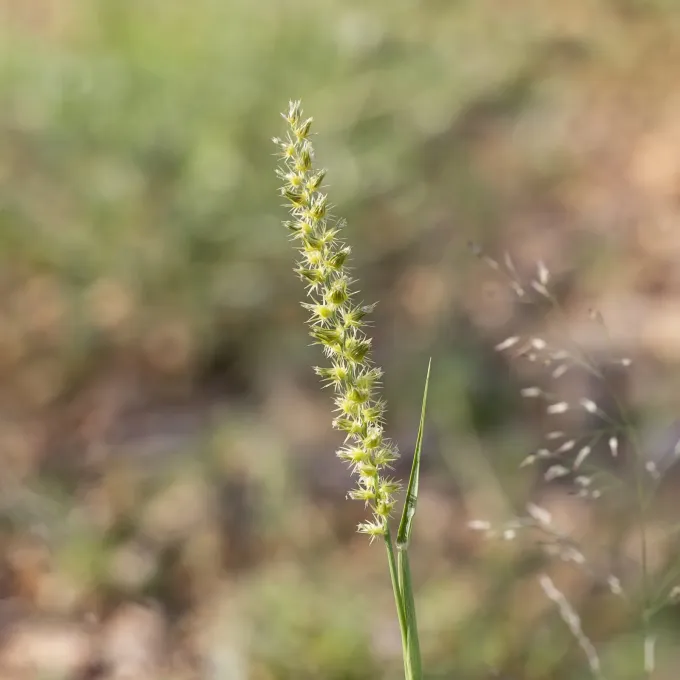
Description
Sowing dates
Cenchrus biflorus is an annual grass species belonging to the Poaceae family, widely recognized for its ability to thrive in harsh, dry environments. Seed germination typically occurs when soil temperatures reach stable, warm levels.
For optimal results, sowing should be conducted when the risk of night frost is completely absent and soil temperatures are consistently above 18 degrees Celsius.
The standard sowing method involves row planting, which facilitates efficient mechanical maintenance and ensures uniform distribution of the plant population across the field.
Seed depth should be kept shallow, between 1 to 3 centimeters, to allow the seedling to emerge quickly before the upper soil layer loses its residual moisture.
Proper field preparation, including light harrowing, is recommended to create a favorable seedbed that ensures good soil-to-seed contact and enhances the uniformity of germination.
Growing requirements
This crop is highly prized for its exceptional drought resistance, making it an ideal candidate for agricultural development in arid and semi-arid climatic zones.
It prefers well-drained, sandy, or light-textured soils. It performs poorly in heavy, waterlogged clay soils, as the root system requires significant oxygen levels to function efficiently.
The species is highly heliophilous and requires full sun exposure throughout the vegetative period; any significant shading will drastically reduce biomass production.
It displays remarkable tolerance to alkaline and saline soils, providing an alternative use for degraded lands that are unsuitable for traditional cereal cultivation.
The optimal thermal range for vigorous growth is between 25 and 35 degrees Celsius, allowing the crop to dominate in extreme heat conditions where other plants might fail.
Main diseases and pests
Like many grasses, Cenchrus biflorus can be susceptible to various fungal pathogens, particularly if periods of high humidity occur during the flowering stage.
Key pests include cereal aphids, which can cause significant damage to young foliage by extracting sap, potentially weakening the entire stand if left unmanaged.
Root rot caused by stagnant water is a critical threat, especially in soils that lack proper drainage, often leading to rapid plant dieback.
Integrated pest management strategies, such as crop rotation and the use of resistant seed varieties, are essential for maintaining the health of the fields.
Field monitoring during the peak of the growing season is necessary to detect early signs of localized outbreaks and apply corrective measures in a timely manner.