
Cenchrus caudatus
Cenchrus caudatus (Schrad.) Kuntze
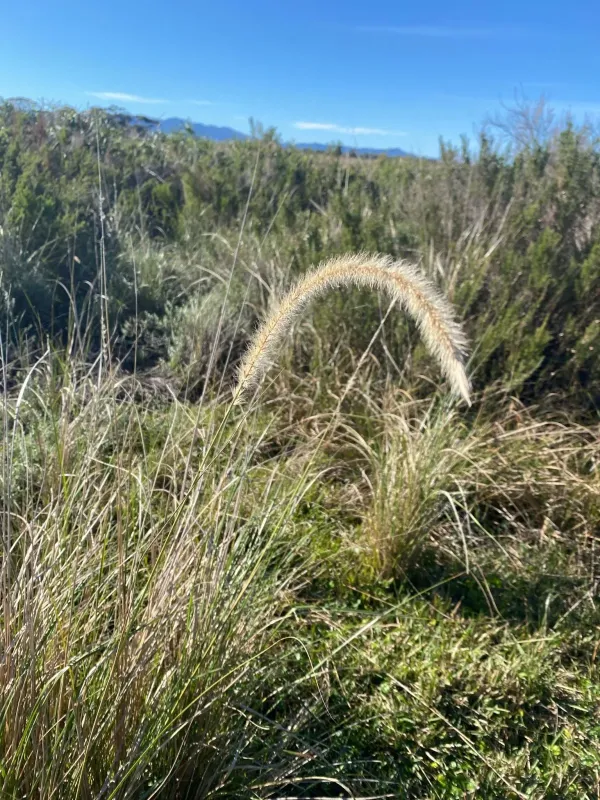
Description
Sowing dates
Cenchrus caudatus is a warm-season perennial grass that requires adequate soil temperatures for successful germination. Planting should occur in late spring, once the risk of frost has completely passed and soil temperatures have reached at least 15°C.
Seedbed preparation is vital for this small-seeded species. The field must be tilled to a fine, firm tilth to ensure that seeds are placed at the correct depth of 2 to 3 cm, allowing for optimal moisture absorption.
Seeding rates should be calibrated based on the specific end-use, whether for permanent pasture or seed production. Uniform seed distribution is critical to prevent overcrowding and ensure even development of the stand.
Post-sowing rolling is highly recommended to improve soil-to-seed contact. This practice helps conserve soil moisture in the germination zone, which is especially important in regions with limited spring rainfall.
Young seedlings require initial protection from weed competition. Strategic placement and proper timing of sowing can significantly improve the establishment of a robust grass stand.
Growing requirements
This species is highly adapted to high-light environments and thrives in areas with strong solar radiation. It exhibits remarkable drought tolerance, making it an excellent choice for regions with erratic rainfall patterns.
Cenchrus caudatus performs best on sandy and well-drained soils. While it can survive in poor-quality soil, it responds vigorously to moderate fertilization, especially nitrogen, which boosts vegetative biomass production.
Soil pH should ideally be in the neutral to slightly alkaline range. Extremely acidic soils can inhibit root development and limit nutrient uptake, leading to reduced productivity and stand vigor over time.
Water management is focused on drainage. The plant cannot tolerate waterlogging or stagnant water, as these conditions rapidly lead to root rot and the decline of the grass stand in affected areas.
Regular monitoring of soil nutrient levels is advised, especially in cut-and-carry systems where biomass is removed from the field, as this helps prevent long-term soil depletion.
Yield
The yield of Cenchrus caudatus is highly dependent on environmental factors and management intensity. Under optimal conditions, the grass can support multiple harvests throughout the growing season.
Biomass accumulation peaks during the warm summer months. Harvesting at the early heading stage provides the best balance between total yield quantity and the nutritional quality of the forage for livestock.
In grazing scenarios, the plant demonstrates good recovery speed after being grazed down. Rotation grazing management is essential to prevent overgrazing and maintain the long-term health of the pasture.
For seed production, yield is influenced by the weather conditions during the pollination and maturation phases. Proper synchronization of these biological stages is crucial for maximizing seed yield.
Total dry matter production per hectare can be quite competitive when compared to other drought-tolerant grasses, provided that basic fertilizer requirements are met during the peak growth months.
Main diseases and pests
Cenchrus caudatus is generally resistant to many common grass diseases. However, in environments with poor air circulation or excessive moisture, fungal pathogens such as rusts may occasionally occur.
Pest management is rarely a major issue if good agricultural practices are followed. Common cereal pests may appear, but damage is usually minor unless the plant is already stressed by other factors.
Weed control is the primary challenge during the establishment phase. Utilizing pre-emergent or post-emergent herbicides can significantly improve the success rate of new plantings in weedy fields.
Maintaining spatial isolation from other monoculture grass stands helps reduce the pressure from specialized insects and pathogens that thrive in single-crop environments.
Integrated pest management strategies, including the use of resistant varieties and crop rotation, are recommended to minimize chemical reliance and preserve the ecological balance of the field.
Harvesting
For high-quality hay, the crop should be harvested before the inflorescences become too mature and develop hard, abrasive bristles. Timely harvest ensures better palatability and nutrient digestibility for animals.
Mechanical harvesting using standard mowers and balers is effective. Proper drying in the field is necessary to achieve the desired moisture content for safe storage without risk of mold development.
Seed harvesting requires careful timing, often utilizing a two-stage process to minimize shattering losses. The inflorescences are cut and allowed to cure before final threshing and cleaning.
Post-harvest conditioning includes sieving to remove debris and ensuring the seed moisture is low enough for long-term storage in cool, dry conditions to maintain high germination viability.
Efficient logistics during the harvest window are essential for minimizing field losses and ensuring that the final forage or seed product meets the required quality standards for commercial use.