
Napier grass
Cenchrus purpurascens Thunb.
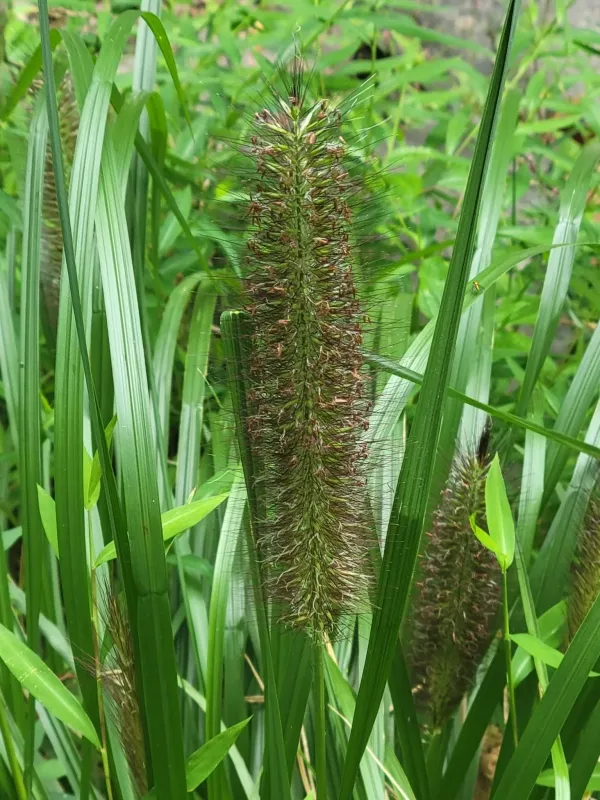
Description
Sowing dates
Napier grass (Cenchrus purpurascens) is a robust perennial forage crop that is primarily propagated through vegetative means, specifically stem cuttings or root divisions.
The optimal planting time coincides with warm weather conditions when soil temperatures are consistently above 18-20 degrees Celsius to ensure rapid rooting.
In regions with distinct seasons, planting should be timed to avoid frost risks, as young plants are extremely sensitive to low temperatures.
If seeds are used for propagation, they are sown in controlled nursery environments with high humidity to encourage successful germination.
Once seedlings reach a manageable height, they are transplanted into the main field with a row spacing of 60 to 90 cm to allow for significant biomass expansion.
Growing requirements
As a member of the Poaceae family, this crop requires full solar exposure to maximize its highly efficient C4 photosynthetic pathway.
The ideal soil conditions are fertile, well-drained loams with a pH level between 5.5 and 7.5, which support vigorous growth and high yield potential.
Napier grass does not tolerate waterlogging; therefore, effective land drainage is essential to maintain root health and prevent oxygen deprivation in the soil.
Growth is temperature-dependent, with optimal biomass accumulation occurring at temperatures above 20 degrees Celsius, while growth ceases near the freezing point.
Regular nitrogen application is vital for this crop, as it significantly enhances the rate of leaf production and overall nutritional content of the fodder.
Yield
Napier grass is highly regarded in the agricultural sector for its exceptional yields, often outperforming many other traditional forage grasses.
Under optimal agronomic conditions, including adequate moisture and nutrient management, annual yields can reach 50 to 80 metric tons per hectare.
The plant exhibits remarkable regrowth capabilities, allowing for multiple harvests per growing season, which ensures a continuous supply of high-quality feed.
Yield stability is directly linked to moisture management, as the plant's high growth rate requires substantial water uptake during peak summer periods.
Proper plant density management helps in maximizing sunlight capture, preventing individual clumps from competing and ensuring uniform stand development.
Main diseases and pests
Fungal diseases, such as leaf spot and rust, are the most significant threats to Napier grass, particularly in humid or overcrowded field conditions.
Root system pests can compromise the longevity of the perennial stands, necessitating careful soil management and potentially targeted integrated pest control measures.
Aphids and other sap-sucking insects can weaken the plant, reducing its vigor and increasing susceptibility to secondary viral and bacterial infections.
Crop rotation and field sanitation are key preventative strategies to minimize the buildup of soil-borne pathogens and insect populations.
Integrated pest management protocols should be followed strictly, focusing on early detection and the use of environmentally responsible treatments when necessary.
Harvesting
Harvesting is typically conducted when the plants reach an optimal stage of vegetative growth, before the stems become overly lignified and fibrous.
A cutting height of approximately 10–15 cm is recommended to protect the tiller buds, ensuring the plant can effectively regenerate for subsequent cuts.
Harvested material is frequently processed into silage or fed directly to livestock to capitalize on its high protein and mineral availability.
Rapid processing and proper compaction in silos are critical for quality fermentation and the preservation of the nutritional value of the harvested biomass.
Following the final harvest of the season, application of fertilizers is recommended to strengthen the root reserves before the crop enters a period of dormancy.