
Kikuyu grass
Cenchrus clandestinus (Hochst. ex Chiov.) Morrone
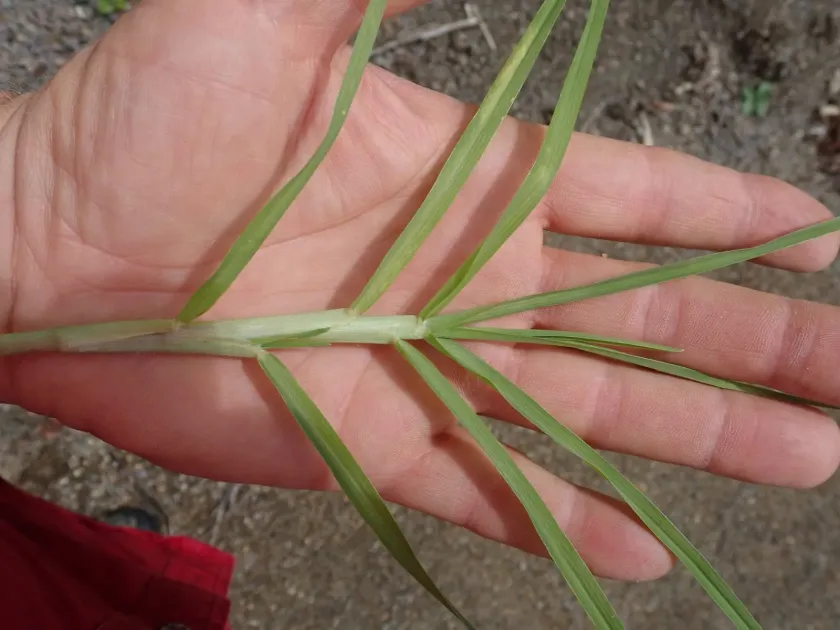
Description
Sowing dates
Kikuyu grass is a perennial, mat-forming grass belonging to the Poaceae family. It is primarily propagated through vegetative means, such as stolons and rhizomes, as seed production is often limited or inconsistent in many environments.
Planting is best carried out during the warm, wet season when conditions favor rapid root development. Small segments of stems with active nodes are buried or pressed into moist, cultivated soil to establish new growth.
The planting density depends on the desired speed of coverage. Closer spacing significantly reduces the time needed for the ground to be fully covered, which is crucial for preventing weed competition in the early stages.
Once established, the grass spreads rapidly via its aggressive creeping habit. It is important to ensure the soil is well-prepared, removing large weeds that could outcompete the young kikuyu shoots during the initial weeks.
Standard horticultural practices for establishing a Kikuyu stand include irrigation during the first few weeks if natural rainfall is insufficient, ensuring the stolons do not dry out before rooting.
Growing requirements
Kikuyu grass thrives in warm, humid subtropical climates. It is highly sensitive to frost, which can kill back the foliage, though the thick, underground rhizomes often survive to regrow when temperatures rise.
It requires fertile soil for peak performance, specifically responding well to nitrogen-rich environments. While it can adapt to various soil textures, from sandy to clay-rich, it performs best in well-drained, nutrient-dense soils.
The plant is known for its high tolerance to heavy grazing and mechanical trampling, making it an excellent choice for dairy and beef cattle pastures. It forms a dense, durable turf that protects the soil from erosion.
Full sun is essential for optimal growth and nutritional density. Shaded areas lead to spindly growth and a higher susceptibility to fungal infections, reducing the overall biomass quality.
Consistent moisture is required for maximum yield. Although it has a degree of drought tolerance once established, prolonged dry spells will cause growth to stall until water becomes available again.
Yield
Kikuyu is recognized for its exceptional biomass production when properly managed. It is widely considered one of the highest-quality pasture grasses for ruminants due to its high protein and mineral content.
The forage quality remains high if the grass is kept in a vegetative growth phase. Crude protein levels can exceed 20% in young, rapidly growing tissue, providing excellent nutrition for livestock.
Yield is highly responsive to fertilizer application, particularly nitrogen. Regular grazing or mowing stimulates the plant to produce new, succulent leaves rather than letting it become coarse and fibrous.
As a pasture crop, it provides continuous grazing potential. Its ability to regrow quickly after being defoliated makes it a reliable feed source throughout the warmer months of the year.
- High leaf-to-stem ratio when managed correctly.
- Rapid recovery rates post-grazing.
- Excellent adaptability to varying livestock management systems.
- High mineral content essential for cattle health.
Main diseases and pests
The primary insect pests affecting Kikuyu include various species of armyworms and cutworms, which can severely defoliate the stand and reduce forage quality during peak growing seasons.
Fungal diseases, such as leaf rust and various blights, can develop in dense stands with poor air circulation or excessive humidity. These infections degrade leaf quality and reduce photosynthetic efficiency.
Root-knot nematodes can also be a significant issue, particularly in lighter, sandy soils. They interfere with nutrient uptake, leading to stunted growth and yellowing of the grass blades.
Management-related threats include overgrazing, which can deplete the plant's carbohydrate reserves in its rhizomes, leaving it weak and susceptible to weed invasion during the following season.
Invasive weed encroachment is generally rare once the Kikuyu is well-established, as its dense mat and aggressive growth habit effectively suppress most competing plant species.
Harvesting
The most common method of "harvesting" Kikuyu is through controlled livestock grazing. Rotational grazing systems are recommended to allow the grass sufficient rest periods to recover after being heavily grazed.
If harvesting for hay or silage, it is necessary to mow at an appropriate height (usually 5–10 cm) to ensure the plant's crown remains intact for regeneration. Timing the harvest before the grass becomes too mature is key to quality.
The rest interval between grazing or mowing cycles should typically range from 21 to 30 days, depending on environmental factors like rainfall and temperature, which dictate the rate of biomass regrowth.
Due to the botanical nature of the flower development, which often occurs hidden within the leaf axils or near the soil surface, commercial harvesting of Kikuyu seed is rare and technically challenging.
Successful long-term harvest management requires balanced stocking rates. Maintaining this balance ensures that the grass stays in a vegetative state, preventing the accumulation of dead, low-quality material at the base.