
Cenchrus pennisetiformis
Cenchrus pennisetiformis Hochst. & Steud.
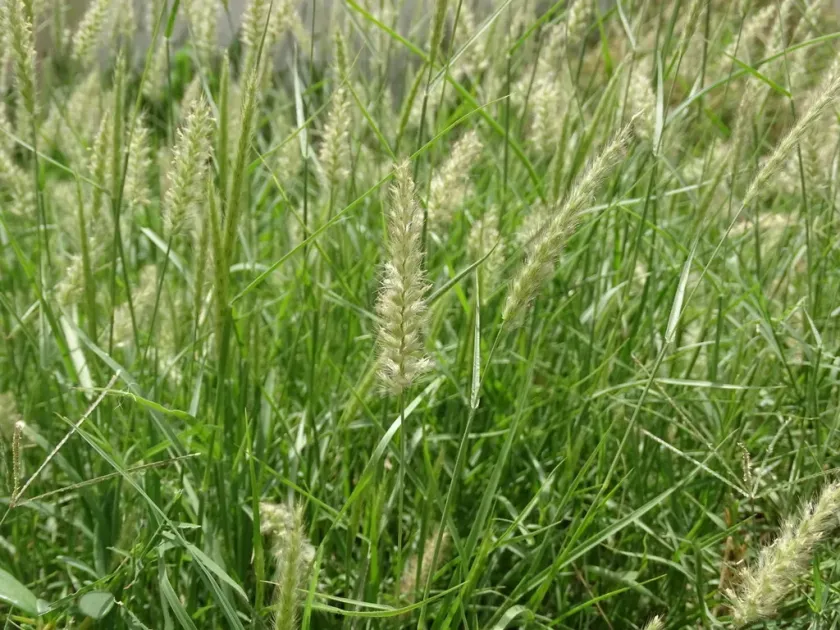
Description
Sowing dates
Sowing should be performed during periods of consistent warmth, usually in late spring or early summer, when the risk of night frosts is completely gone. Soil temperature is a critical factor for ensuring rapid germination and uniform emergence of seedlings.
Seeds should be placed at a shallow depth of approximately 1 to 2 centimeters. Planting too deep can hinder the emergence process, as the seedlings may exhaust their energy reserves before reaching the surface.
Farmers often utilize either row planting or broadcast sowing methods. Row planting is particularly advantageous as it allows for mechanical weeding in between rows, which significantly reduces weed competition during the early stages of plant development.
Proper soil preparation is essential to ensure good seed-to-soil contact. A finely pulverized and leveled seedbed helps in moisture retention and facilitates the quick absorption of water by the seeds, leading to faster germination.
Compacting the soil after sowing using a roller is a recommended practice to ensure proper depth and moisture contact. This step helps in maintaining capillary moisture around the seed zone, protecting the seeds from desiccation under the sun.
Growing requirements
Cenchrus pennisetiformis is a perennial grass species belonging to the Poaceae family. It is widely recognized for its exceptional drought tolerance and its ability to thrive in poor soils, making it an essential forage crop in arid and semi-arid climatic zones.
The plant features a deep and vigorous root system that allows it to access water resources in deep soil layers. It has evolved to perform well under intense sunlight and high temperatures, which are characteristic of its native tropical and subtropical regions.
It prefers well-drained sandy or sandy-loam soil textures. The crop is highly sensitive to waterlogging and soil salinity, so selecting planting sites that avoid low-lying areas with poor drainage is crucial for successful establishment and long-term productivity.
The optimal pH range for this grass lies between neutral and slightly alkaline levels. While it can survive in nutrient-poor environments, it responds positively to nitrogen fertilization, which enhances vegetative growth and overall biomass production.
The plant requires a stable, warm temperature regime during its growing season. It is susceptible to frost, and active growth initiates only once temperatures have consistently risen above the threshold required for metabolic activation.
Yield
The yield of green forage from Cenchrus pennisetiformis is heavily dependent on moisture availability and soil fertility levels. Under optimal management conditions, the crop can provide multiple harvests throughout a single growing season.
As a pasture grass, it exhibits good recovery rates after being grazed by livestock. Rotational grazing management is recommended to allow the plant enough time to recover its vegetative mass and replenish energy reserves in its root system.
The nutritional quality of the forage varies significantly depending on the growth stage at the time of harvesting. For high-quality feed, it is advisable to mow the grass before it reaches the reproductive stage, as fiber content increases rapidly thereafter.
Maximizing productivity involves consistent monitoring of soil nutrient levels and the health of the pasture. Proper nitrogen supplementation can significantly boost biomass yield in older stands, provided that adequate soil moisture is maintained.
Proper haymaking techniques are essential for preserving the nutritional value of the harvested biomass. Timely cutting and drying ensure that the final product remains highly digestible and rich in essential nutrients for livestock feeding.
Main diseases and pests
Cenchrus pennisetiformis possesses a strong natural resistance to most common diseases. However, in high humidity environments, fungal foliage infections can occur. Maintaining proper plant spacing and avoiding dense stands can mitigate these risks effectively.
Specific pests can target the flowering spikes, potentially reducing seed production. Regular scouting and monitoring of pest populations allow for timely intervention, often using biological control methods to protect the stand integrity.
Nematode infestations can become an issue in fields with long-term continuous cultivation of the same grass species. Implementing a crop rotation strategy is the most effective approach to break the lifecycle of soil-borne pathogens and maintain soil health.
Seedlings are particularly vulnerable to soil-dwelling pests during the emergence phase. Applying seed treatments with appropriate insecticides can serve as a preventative measure to protect the crop during its most sensitive period of growth.
Weeds are the primary competitor during the establishment phase of the crop. Mechanical control and pre-emergence site preparation are vital to ensure that the young grass can compete successfully for water, light, and soil nutrients.