
Fortune's Osmanthus
Osmanthus fortunei
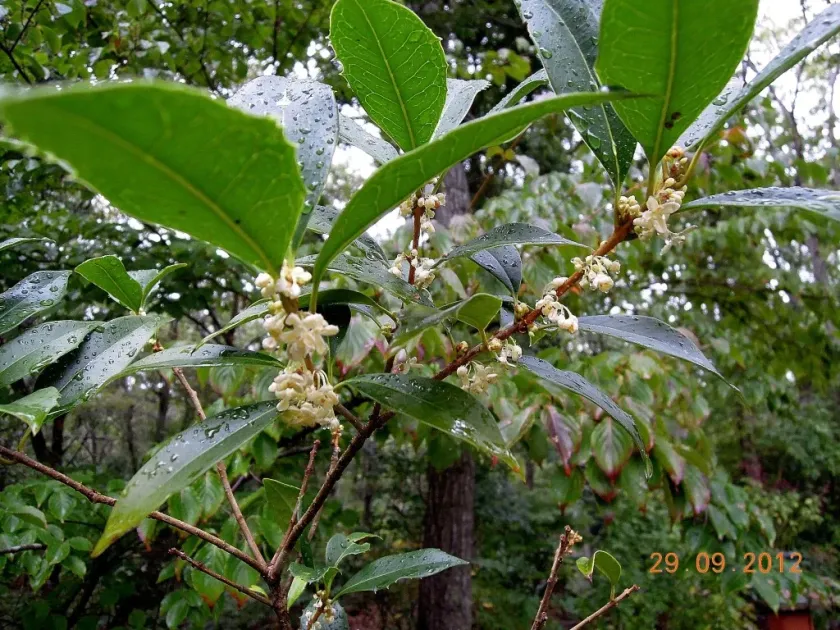
Description
Growing requirements
Fortune's Osmanthus (Osmanthus × fortunei) is a popular evergreen shrub belonging to the Oleaceae family. It is a well-known hybrid resulting from the cross between Osmanthus fragrans and Osmanthus heterophyllus, inheriting the best traits of its parent species.
Originating from East Asia, this plant is well-adapted to temperate and subtropical climates. It is widely cultivated for its dense, glossy foliage and the intense fragrance of its white autumn flowers, which adds significant value to ornamental gardening.
To ensure healthy growth, the plant requires well-drained, fertile soil with a slightly acidic to neutral pH level. It thrives in locations that offer protection from harsh winter winds, which can damage its foliage in less temperate zones.
Botanically, it is characterized by its stiff, leathery leaves with serrated margins. The flowers are small but highly aromatic, blooming in clusters that release a scent often described as a mix of jasmine and apricot, enriching the garden atmosphere in late summer and autumn.
In landscape architecture, it is primarily used for creating hedges, screens, or as a specimen plant. Due to its tolerance for pruning, it is highly favored for topiary art and formal garden designs where precise shaping is required.
Main diseases and pests
Root rot is the most significant threat to the plant, primarily caused by waterlogged soil conditions. Ensuring proper drainage is essential for maintaining the health of the root system and preventing fungal pathogens from proliferating in the substrate.
Scale insects represent a common pest challenge for this species, as they can cause yellowing of leaves and overall stunted growth. Regular inspection and the application of horticultural oils or systemic insecticides help manage and eliminate these infestations.
Spider mites can become a nuisance during hot, dry periods when the air is particularly arid. Maintaining proper soil moisture and periodic overhead watering of the foliage can help mitigate the risk of mite population explosions.
Powdery mildew may occur if the shrub is planted in areas with poor airflow and high humidity. Providing enough space between plants and practicing selective pruning to improve crown ventilation are key preventive measures.
Nutrient imbalances, particularly iron or magnesium deficiencies, can lead to chlorosis. Regular soil analysis and the application of balanced, slow-release fertilizers ensure that the plant maintains its deep green leaf color throughout the growing season.