
Asian Osmanthus
Osmanthus asiaticus
Description
Growing requirements
Asian Osmanthus (Osmanthus asiaticus) belongs to the Oleaceae family. It is a prized evergreen shrub or small tree recognized for its dense foliage and intensely fragrant flowers. Native to the temperate and subtropical regions of East Asia, it thrives in environments that provide consistent moisture and mild seasonal transitions.
The plant requires well-drained, nutrient-rich soil with a slightly acidic to neutral pH level. Proper site selection is crucial to ensure root health, as stagnant water significantly increases the risk of root rot, which is the most common cause of mortality for this species in garden settings.
Climatic requirements focus on protection from extreme cold and scorching direct sunlight. While Asian Osmanthus is relatively hardy, mature specimens prefer semi-shaded locations that offer protection from harsh winter winds, which can desiccate the evergreen leaves and damage the flower buds.
Horticultural uses range from landscaping and ornamental garden design to commercial aromatic extraction. The flowers contain essential oils used in the perfume industry, prized for their complex fragrance profiles that evoke notes of stone fruits and sweet floral nectar.
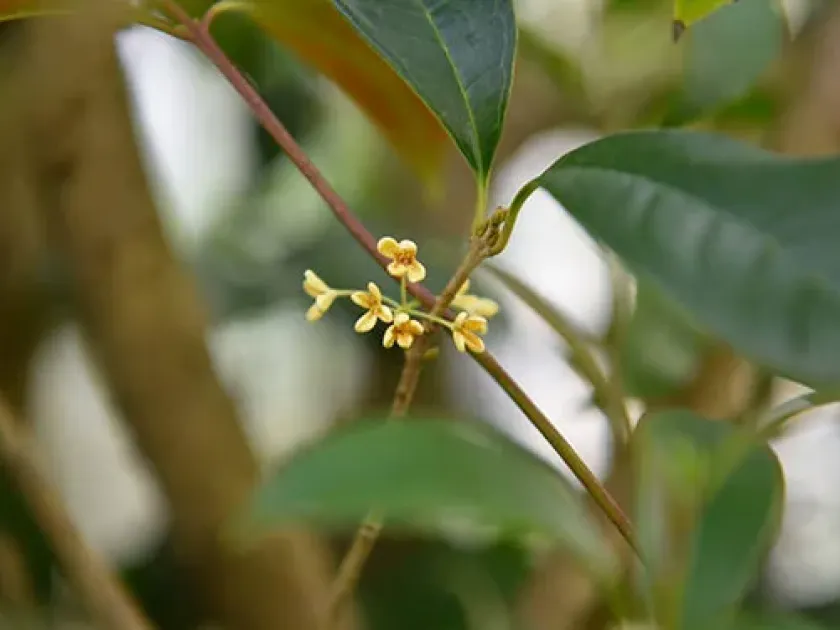
Botanically, the species is defined by its thick, leathery leaves with serrated margins. The flowering cycle produces small but prolific clusters of blossoms in the leaf axils. The fruit is typically a drupe, which contains a single seed and attracts various local bird species in its natural habitat.
Main diseases and pests
Common pests affecting this crop include scale insects, spider mites, and aphids. These pests usually target younger shoots or the undersides of leaves, and their presence can be mitigated through regular horticultural soap applications and maintaining optimal plant vigor.
Fungal diseases, such as leaf spot or blight, occur primarily in environments with poor air circulation and excessive overhead moisture. Ensuring correct pruning and spacing between plants is an essential agronomic practice to promote airflow and minimize humidity around the foliage.