
Orange Osmanthus
Osmanthus aurantiacus
Description
Growing requirements
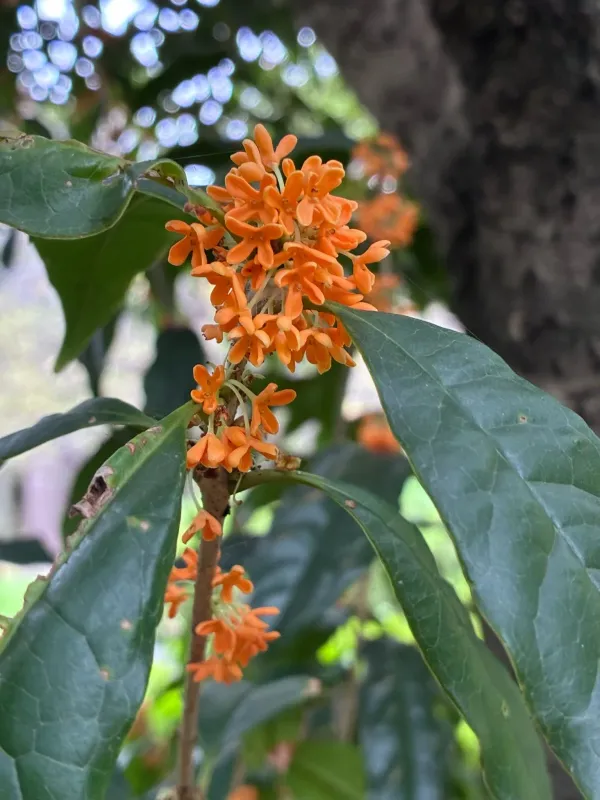
Orange Osmanthus (Osmanthus aurantiacus) is an evergreen shrub or small tree belonging to the Oleaceae family. It is widely recognized for its stunning clusters of bright orange, highly fragrant flowers that bloom in autumn and provide an intense, sweet, and fruity aroma.
This species is native to mountainous regions of China and Japan. It thrives in humid, subtropical climates, which closely mirror its natural habitat. It prefers areas with mild winters and warm, moist summers, making it suitable for protected gardens or climate-controlled environments.
The culture requires fertile, well-draining soil with a neutral to slightly acidic pH level. Proper drainage is the most critical factor for success, as the roots are highly sensitive to waterlogging and soil compaction, which often leads to root death.
Regarding light, Osmanthus aurantiacus performs best in partial to full sun. However, in regions with very intense heat, afternoon shade is recommended to prevent scorching of the leaves and to maintain the plant's overall health and vigor during the peak of summer.
Maintenance involves routine pruning to encourage a denser shape and promote better flowering. Fertilization should be balanced and applied during the early growth stages, avoiding excessive nitrogen, which can lead to rapid, weak shoot development instead of reproductive growth.
Main diseases and pests
Common pests affecting Osmanthus include scale insects, which may congregate on the underside of leaves or stems. These pests can weaken the plant by feeding on sap and are often followed by the development of sooty mold, necessitating proactive monitoring.
Fungal diseases like leaf spot can occur if the humidity levels are too high and the air circulation around the canopy is poor. Maintaining adequate spacing between individual plants is the best preventative strategy against these common horticultural threats.
Spider mites are a potential issue in drier, indoor environments or during periods of drought. Their presence is indicated by the fine webbing and speckled leaves, and they can be managed using specialized horticultural oils or insecticidal soaps applied during early infestations.
Root rot is the most serious disease risk, almost always linked to overwatering or poor drainage. Once root decay begins, recovery is very difficult; therefore, providing a porous soil mix and avoiding standing water is fundamental to protecting the root system.
Integrated Pest Management (IPM) is the recommended approach for maintaining healthy Osmanthus crops. This includes regular sanitization of the planting site, removing debris, and applying biological controls whenever possible to minimize the reliance on harsh chemicals.
Harvesting
The primary economic use of Orange Osmanthus is in the production of high-value essential oils and aromatic extracts. The flowers contain complex volatile compounds that are highly prized by the perfume and cosmetic industries for their unique fruity notes.
Harvesting is a delicate process performed during the peak flowering phase. Workers typically collect the blossoms by hand, often in the early morning when the concentration of essential oils is at its highest, ensuring the quality of the raw material remains intact.
Once collected, the flowers can be processed immediately through steam distillation or solvent extraction to produce an absolute. In addition to perfumery, the dried flowers are traditionally used in gourmet tea production to infuse the drink with a natural, sweet scent.
Yield levels depend heavily on the age of the plant and the climatic consistency throughout the year. Mature specimens provide a significantly larger volume of blooms, and skilled pruning techniques help maximize the surface area for flower bud formation.
Storage of the harvested crop requires careful temperature control to prevent the degradation of volatile oils. Proper drying protocols are essential for long-term storage, ensuring that the aroma remains strong enough for commercial food or scent applications.