
Burkwood osmanthus
Osmanthus burkwoodii
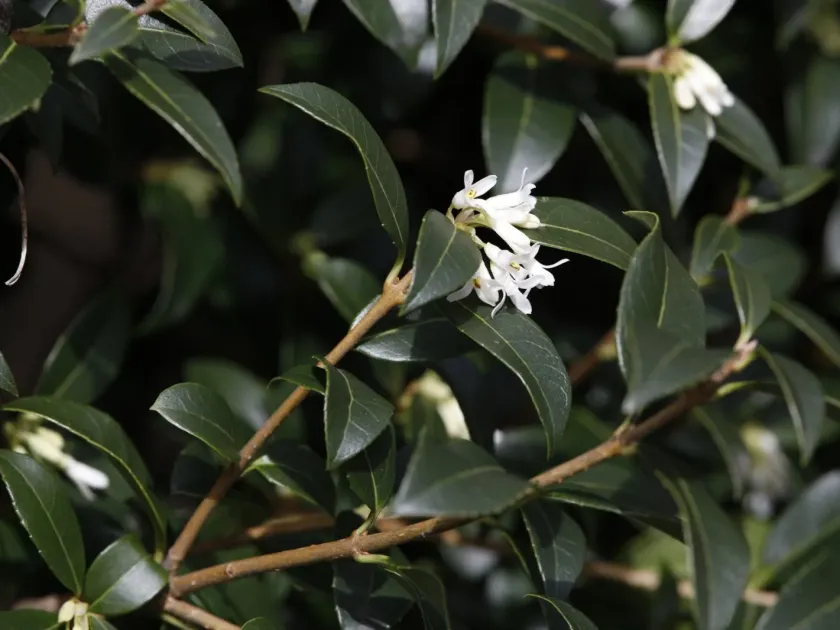
Description
Growing requirements
Burkwood osmanthus (Osmanthus × burkwoodii) is a sophisticated evergreen shrub belonging to the Oleaceae family. It is a hybrid variety known for its dense, glossy foliage and highly fragrant white flowers that bloom in early spring.
The plant thrives in locations with full sun to partial shade. To ensure optimal health, it should be protected from harsh, cold winds, making it a perfect candidate for positioning near sunny south-facing walls or within sheltered garden borders.
Regarding soil, it prefers fertile, humus-rich, and well-draining substrates. It is essential to avoid sites prone to waterlogging, as the root system is sensitive to prolonged moisture which can lead to root rot and other physiological issues.
Agrotechnical care includes consistent watering, especially during the first few years of establishment. Mulching around the base of the plant helps retain soil moisture and protects the shallow root system from extreme temperature fluctuations.
As a landscape feature, this shrub is highly valued for its slow growth and year-round green foliage. It is frequently utilized in formal gardens, for evergreen hedging, or as an ornamental container plant, responding well to light pruning to maintain its desired shape.
Main diseases and pests
Common issues include fungal leaf spots and root pathogens caused by damp conditions or poor soil drainage. Maintaining proper spacing is crucial to encourage air circulation through the shrub's foliage.
Pests like scale insects, mealybugs, and spider mites can sometimes inhabit the undersides of leaves, particularly during periods of low humidity. These pests weaken the shrub if left unchecked.
Management of these threats involves monitoring the foliage regularly and applying appropriate horticultural oils or systemic insecticides when an infestation is detected in its early stages.
Preventive maintenance includes clearing debris from the base of the plant and applying a balanced fungicide spray if the local climate is known to be prone to fungal leaf diseases.
Regular spring pruning helps keep the structure of the shrub open and healthy. Removing dead or damaged wood improves the overall vigor of the plant and reduces the surface area available for potential pest or fungal colonization.