
American osmanthus
Osmanthus americanus
Description
Growing requirements
American osmanthus, botanically known as Osmanthus americanus and often called wild olive, is an evergreen shrub or small tree belonging to the Oleaceae family. Native to the southeastern United States, it thrives in varied habitats ranging from moist floodplains to sandy upland forests.
This species requires well-drained, slightly acidic soil rich in organic matter. While it is adaptable to different soil textures, it is highly intolerant of waterlogged conditions, which can quickly lead to root rot. Ideally, it should be planted in partial shade, though it maintains a good growth rate in both full sun and deep shade.
In terms of climate, it is suitable for USDA hardiness zones 6 through 9. During cold winters, especially at the northern limits of its range, the plant benefits from protection against desiccation caused by harsh winds. It displays moderate drought tolerance once established, but regular irrigation is necessary during prolonged hot spells.
Cultivation practices involve routine pruning to maintain desired shape and remove deadwood. Fertilization with balanced, slow-release fertilizers should be applied in early spring as new growth begins. Mulching the root zone helps regulate soil moisture levels and protects the shallow roots from drastic seasonal temperature fluctuations.
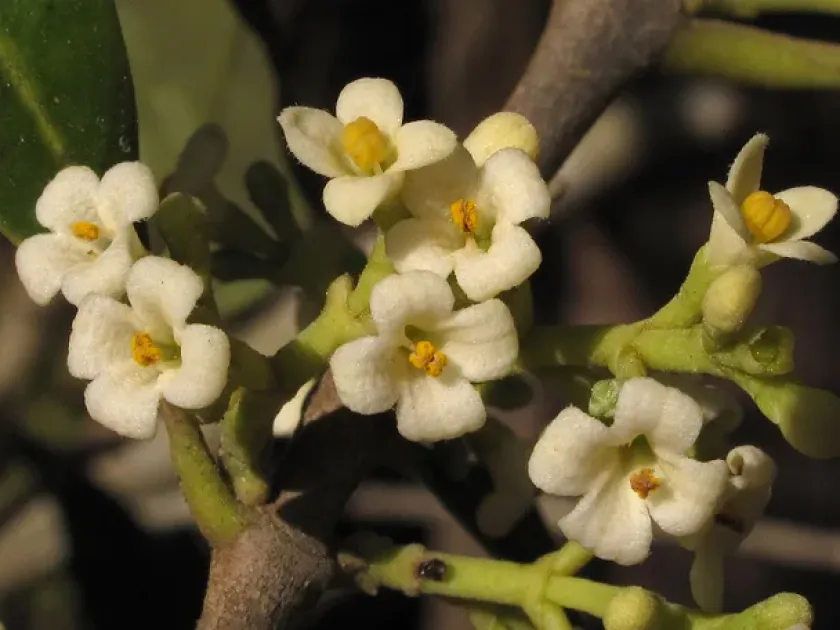
Its primary use is in ornamental landscaping and land reclamation. Known for its glossy, dark green foliage and clusters of fragrant white flowers in the spring, it is widely utilized for creating privacy hedges, screens, or as a specimen plant. It serves as an excellent broad-leaved evergreen addition to native garden palettes.
Main diseases and pests
American osmanthus is generally robust and free from serious pest issues. However, it can occasionally be attacked by scale insects or mealybugs, which tend to congregate on the stems or the undersides of the leaves. Manual removal or appropriate horticultural oils can manage these minor infestations.
Fungal leaf spot diseases may occur under conditions of high humidity or poor air circulation. To minimize these risks, gardeners should ensure adequate spacing between plants and avoid overhead watering, which keeps the foliage wet for extended periods.