
Armed Osmanthus
Osmanthus armatus
Description
Growing requirements
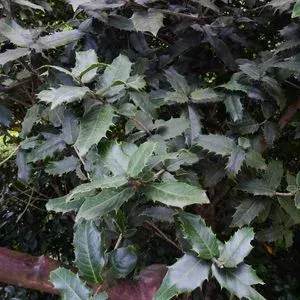
Armed Osmanthus (Osmanthus armatus) is a distinct evergreen shrub belonging to the Oleaceae family. Originating from the mountainous regions of central and western China, this plant is well-regarded for its glossy, leathery, and serrated foliage that persists throughout the year.
The cultural requirements for this species focus on a sheltered position with light shade. While it can tolerate more exposure, providing partial shade helps maintain the deep green color of the leaves and protects the plant from extreme heat stress. It is a slow-growing plant that demands patience but rewards with longevity.
Soil quality is paramount for the health of Osmanthus armatus. It requires a well-drained, fertile soil, ideally with a neutral to slightly acidic pH. Incorporating organic matter, such as leaf mold or compost, at the time of planting encourages strong root development and supports the plant's overall vigor.
General maintenance involves keeping the soil consistently moist but never waterlogged. Since the plant is naturally structured and compact, heavy pruning is rarely necessary. Instead, light maintenance pruning can be performed after the flowering season to shape the shrub or remove any deadwood.
In terms of usage, this shrub is highly valued for creating privacy screens and impenetrable hedges due to its sharp-edged leaves. It serves as an excellent architectural element in formal gardens and can also be cultivated as a specimen plant, providing visual interest and fragrance when in bloom.
Main diseases and pests
Pathogen risks for Osmanthus armatus mainly involve root rot and fungal foliage spots, often precipitated by poor drainage or high ambient humidity. Ensuring proper air circulation around the shrub is a standard and effective preventive measure for most fungal ailments.
Common insect pests include scale insects and spider mites, which thrive in dry environments. If an infestation occurs, horticultural oils or soaps are generally effective. Keeping the plant in a vigorous state through appropriate nutrition and hydration helps it naturally resist severe pest damage.