
Globe buddleia
Buddleja globosa Hope
Description
Growing requirements
Globe buddleia (Buddleja globosa Hope) is a semi-evergreen ornamental shrub belonging to the Scrophulariaceae family. Native to the mountain regions of Chile and Argentina, this plant is well-adapted to specific climatic niches, favouring regions with mild winter conditions.
The plant requires full sun exposure and a location protected from strong, cold winds to reach its full flowering potential. In temperate zones, it is highly recommended to provide winter protection, as the species is susceptible to damage during periods of prolonged freezing temperatures.
Optimal growth is achieved in fertile, well-drained loamy soils with a neutral to slightly alkaline pH. Proper drainage is a critical success factor, as the roots are sensitive to waterlogging, which often leads to poor development or physiological stress in heavy soil types.
Cultivation practices involve maintaining consistent soil moisture during the active growing season. However, one must balance irrigation to avoid excessive wetness, which can cause root rot, particularly during cooler months when the metabolic activity of the plant is naturally slower.
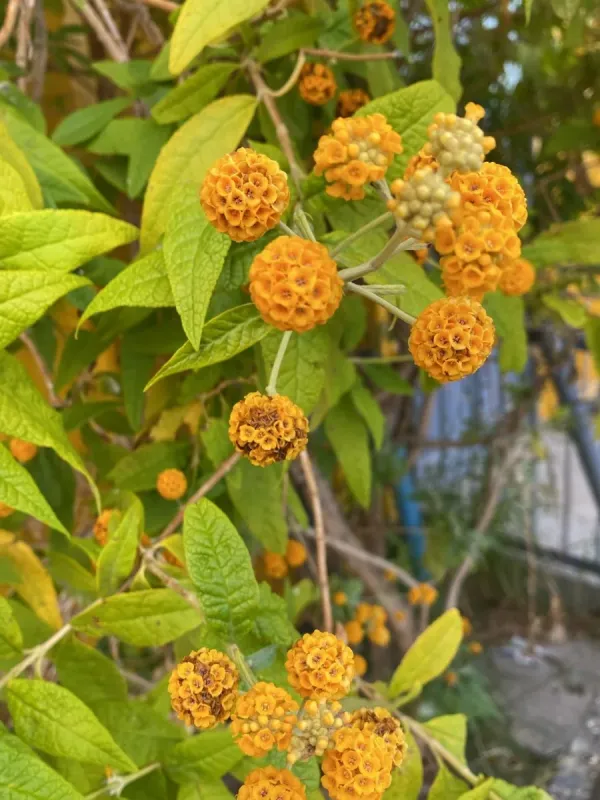
The primary use of Buddleja globosa is in ornamental landscaping, where it is highly prized for its unique, ball-shaped bright yellow inflorescences. Its intense honey-like fragrance makes it a valuable plant for creating sensory gardens and attracting pollinators to the site.
Main diseases and pests
Spider mites are common pests that thrive in the dry conditions often associated with summer heat. Regular monitoring of the foliage and the application of appropriate miticides are necessary to prevent defoliation and ensure the health of the plant throughout the season.
Whiteflies can infest the shrub, particularly in sheltered or crowded conditions with poor air circulation. Effective control usually requires systemic insecticides that target the larvae and adults while minimizing impact on beneficial pollinating insects visiting the flowers.
Grey mould (Botrytis) is a frequent threat when environmental conditions are excessively humid. Prompt identification of symptoms, such as fuzzy grey mycelium on leaves, and the removal of infected parts are essential to prevent the spread of the fungus to the rest of the shrub.
Root rot occurs primarily due to poor soil drainage or excessive watering regimes. To mitigate this risk, growers should ensure that the planting site has an effective drainage layer and avoid mulch accumulation directly against the main stem of the shrub.
Routine sanitation, including the removal of dead or crossing branches in early spring, is crucial for maintaining plant vigour. Proper pruning improves air movement through the canopy, which is the most effective cultural method for preventing various fungal diseases.