
Dillenius prickly pear
Opuntia dillenii (Ker Gawl.) Haw.
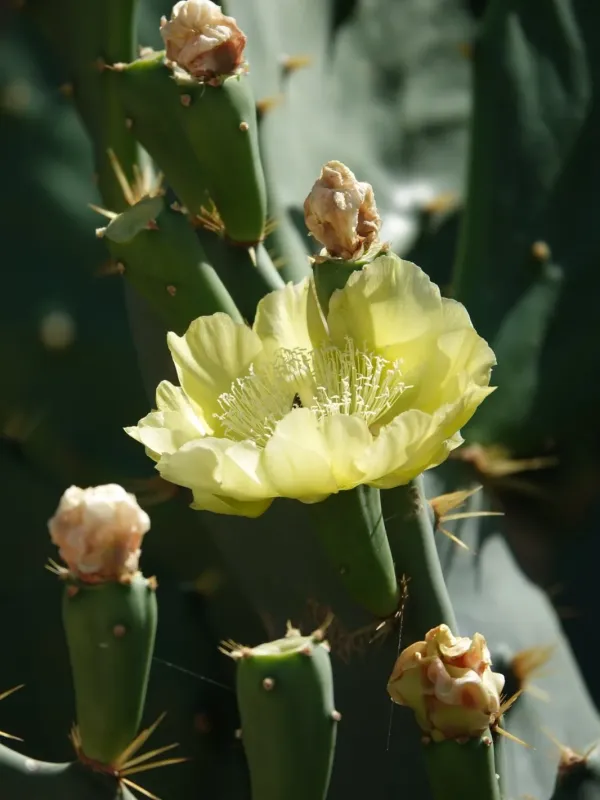
Description
Growing requirements
Dillenius prickly pear (Opuntia dillenii) is a significant species within the Cactaceae family. Originally native to tropical America, it has been naturalized in many arid and semi-arid regions globally due to its exceptional survival capabilities.
The plant is defined by its flattened, succulent stem segments known as cladodes. These segments are highly efficient at water storage, allowing the plant to thrive in environments where seasonal rainfall is extremely limited.
Agricultural success depends on providing well-drained, sandy, or rocky soil types. The plant does not tolerate waterlogging, which can lead to rapid root degradation in commercial plantations.
Climatically, it requires high heat and intense sunlight to reach maturity. It acts as an excellent soil stabilizer in erosion-prone areas, forming dense, impenetrable thickets that protect the topsoil.
Economically, the species is utilized for fodder during drought periods, as a source of fruit for food production, and as a natural barrier in integrated farming systems to manage livestock grazing.
Main diseases and pests
The most prominent biological threat is the cactus scale insect, which compromises the integrity of the epidermal layer and stunts the growth of the succulent pads.
Specific moth larvae, particularly those from the Cactoblastis genus, can devastate populations by boring through the interior tissues of the stems.
Fungal infections, often characterized by necrotic lesions, frequently emerge following periods of high humidity combined with poor air circulation around the plants.
Soft rot, caused by bacterial agents, remains a major concern in nurseries where plant density is high and proper spacing is not strictly maintained.
Integrated pest management strategies should focus on biological controls and strict sanitation protocols to ensure the longevity of the cactus plantation.