
Olearia axillaris
Olearia axillaris (DC.) Benth.
Description
Sowing dates
Olearia axillaris is primarily propagated from seeds or cuttings. Sowing seeds requires a well-draining, sandy-based medium, ideally performed in early spring with temperatures kept consistently around 18–20 degrees Celsius to ensure high germination rates.
For vegetative propagation, semi-hardwood cuttings should be harvested in late summer. Treating these cuttings with rooting hormone before inserting them into a peat and sand mixture significantly improves the success rate of root development.
Transplanting seedlings to their permanent garden location should occur once the risk of spring frost has completely passed. Providing adequate space is crucial, as the shrub can develop a wide, dense habit over time.
Young plants require an initial period of acclimation, which involves partial shading during the hottest part of the day for the first few weeks after planting to prevent transplant stress.
Establishing the plant in a site with excellent air circulation is key to successful growth, as this prevents moisture from trapped air pockets around the foliage and stems.
Growing requirements
Olearia axillaris, commonly known as the coastal daisy bush, belongs to the Asteraceae family. It is a hardy, evergreen shrub native to the coastal regions of Australia, specifically adapted to sandy, nutrient-poor environments.
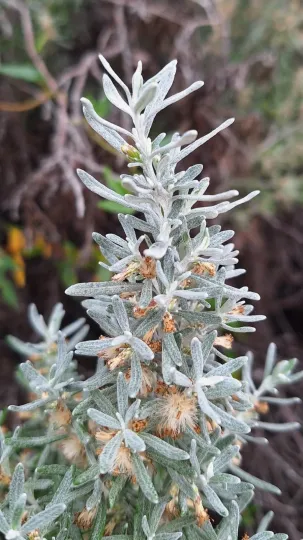
The plant features distinct botanical characteristics, including narrow leaves covered in a silvery-white tomentum. This dense hair covering acts as a protective layer, reflecting harsh sunlight and minimizing moisture loss.
Soil requirements are strict: the plant mandates superior drainage. It thrives in sandy or light loamy soils and is highly intolerant of waterlogged conditions, which lead to rapid root decay.
Being a heliophyte, this shrub demands full sun exposure to maintain its compact, silvery appearance. Lack of light causes the shrub to lose its structural integrity and become leggy or susceptible to fungal infections.
While resistant to salt spray and wind, the plant has moderate cold tolerance. In climates with heavy frost or freezing winters, it must be grown in containers to allow for indoor protection during the dormant season.
Main diseases and pests
The most significant threat to the health of Olearia axillaris is root rot, typically caused by improper watering regimes or soil compaction. Poor drainage quickly leads to an environment where soil pathogens thrive.
Powdery mildew may occur if the plant is sited in an area with poor airflow or if there is excessive ambient humidity. Regular pruning to thin out the inner branches usually alleviates this issue.
Insect pests, such as aphids and scale insects, may occasionally infest young shoots. Monitoring for these pests during the peak growing season allows for early intervention, often manageable with simple horticultural soaps.
Nutritional imbalances, particularly an overabundance of nitrogen, can result in overly lush, weak growth that becomes a primary target for pests and reduces the plant's natural resistance to environmental stress.
Integrated pest management, including regular inspection and maintaining appropriate soil moisture levels, is the most effective way to keep the shrub healthy and thriving for many years.
Harvesting
The primary use of Olearia axillaris is within ornamental horticulture and coastal landscape design. It serves as an excellent feature plant for silver-themed borders or dry-climate gardens.
Due to its resilience to salt spray, it is widely utilized as a windbreak or hedge in coastal residential areas, providing privacy while requiring minimal maintenance compared to broad-leaved hedge species.
Pruning is essential for maintaining aesthetic appeal. The shrub should be trimmed back annually immediately after flowering to stimulate dense, new growth and prevent the accumulation of dead wood in the inner crown.
The foliage is highly valued in the floral industry as a durable filler. Stems are often harvested for decorative arrangements, where their unique silvery texture complements both fresh and dried floral components.
When managed properly, the shrub provides a long-lasting, low-maintenance vertical structure in the landscape, making it a sustainable choice for xeriscaping projects where water conservation is a priority.