
Olearia haastii
Olearia x haastii Hook. f.
Description
Growing requirements
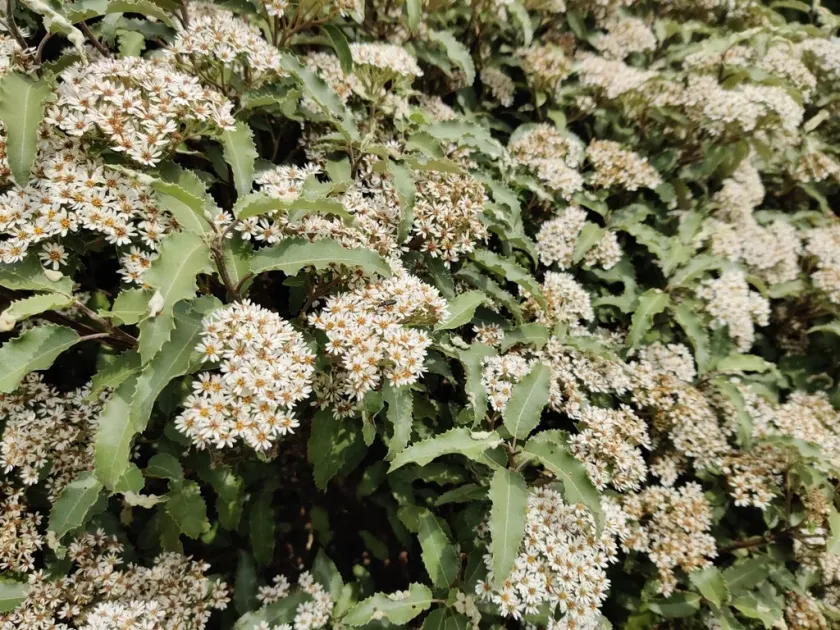
Olearia haastii, commonly known as the Daisy Bush, is an evergreen shrub belonging to the Asteraceae family. It is a robust hybrid prized for its leathery, oval leaves and clusters of fragrant, white daisy-like flowers.
Originating from New Zealand, this species is well-adapted to coastal conditions and temperate maritime climates. It is widely recognized for its ability to withstand wind and salt spray.
For optimal growth, the plant requires well-drained, fertile soil. It is relatively adaptable to various soil types, but it thrives best in slightly acidic or neutral conditions where water does not pool around the base.
Ideally, this shrub should be planted in a sunny position. While it prefers full sun, it can tolerate light shade, provided it receives sufficient light to maintain its compact and dense growth habit.
In landscaping, Olearia haastii is frequently used for creating informal hedges, windbreaks, or as a structural specimen in a mixed border. Its year-round foliage provides excellent evergreen cover.
Main diseases and pests
Root rot is the primary threat to this shrub, usually caused by poor drainage or over-irrigation. Ensuring the soil structure is friable and well-aerated is the best defense against fungal decay.
Powdery mildew can occur if the plant is grown in areas with poor air circulation or high humidity. Managing the density of the foliage through periodic pruning helps mitigate this risk.
Pests such as aphids and spider mites can attack new growth. These are most active during dry, hot weather, necessitating regular monitoring of the plant's condition during the peak of summer.
If an infestation occurs, application of horticultural soap or systemic insecticides is recommended to control the population and prevent leaf damage.
Maintaining plant health through correct fertilization and seasonal pruning ensures that the shrub remains vigorous and less susceptible to the aforementioned diseases and pest attacks.