
Olearia avicenniifolia
Olearia avicenniifolia (Raoul) Hook. f.
Description
Growing requirements
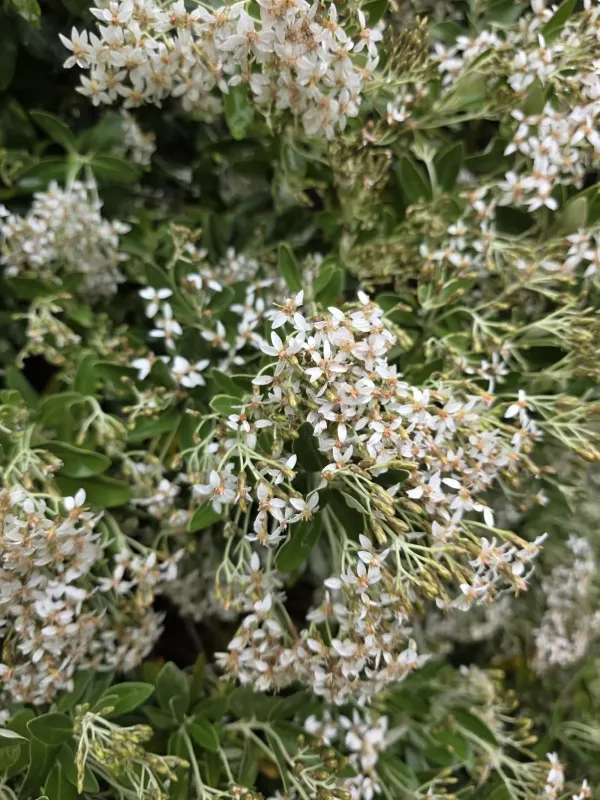
Olearia avicenniifolia is an evergreen shrub or small tree belonging to the Asteraceae family. Native to the South Island of New Zealand, this plant is well-regarded in horticulture for its resilience and unique foliage, which features a silvery-white tomentum on the underside of the leaves.
The cultivation of this species requires well-drained soil conditions. It thrives in various soil types, provided they are not waterlogged, as the root system is susceptible to decay in heavy, compacted soils that lack proper aeration and drainage capabilities.
Climatically, the plant prefers temperate maritime environments. While it is reasonably hardy and can withstand exposure to coastal winds, it performs best when protected from extreme, sustained frosts and harsh, drying winter winds that can damage the foliage and young branches.
Sun exposure is critical for maintaining the plant's health and aesthetic appeal. Ideally, it should be planted in a location that receives full sun or partial shade. Adequate sunlight ensures the plant remains compact and encourages the development of its characteristic floral displays.
Standard agronomic maintenance includes formative pruning, which is typically conducted after flowering. This practice helps to manage the shrub's size, improves structural integrity, and promotes denser growth, making it a versatile choice for hedging or ornamental borders in landscapes.
Main diseases and pests
Olearia avicenniifolia is generally considered a low-maintenance plant with few major pest or disease issues. Most problems encountered are environmental, arising from incorrect site selection, particularly where drainage is inadequate or humidity is excessively high for prolonged periods.
In certain conditions, pests such as aphids or spider mites may affect new growth. These are usually managed through cultural practices like ensuring proper plant spacing for air circulation, or, if necessary, the application of horticultural soaps or specialized insecticides.
Fungal issues, such as powdery mildew, may occur if the foliage remains constantly damp due to poor airflow within the shrub's canopy. Regular thinning of the branches and removing dead wood help to improve ventilation, significantly reducing the risk of fungal outbreaks.
Root rot remains the most serious health threat, usually caused by over-irrigation or planting in heavy, clay-based soils without amending the structure. Maintaining a balance between soil moisture and air availability is essential for the long-term vitality of the shrub.
Monitoring for signs of nutrient deficiency or stress, such as leaf yellowing or stunted growth, allows for quick adjustments in fertilization. Providing a slow-release, balanced fertilizer in early spring can help strengthen the plant's resistance against minor external stressors.